The Hero’s Journey of the 21st Century
Article By Julian Powe
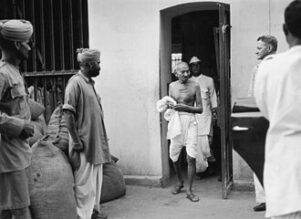 In our fractured times, we can all assuredly bear witness to the heroic contributions of some of our fellow human beings: friends, family and community members who are building for the common good, overcoming adversity, bringing people together and instilling hope. We all carry heroes from the past in our souls – for me, Socrates for his unquenchable search for truth; Simone Weil for her radical compassion; Nelson Mandela for his implacable pursuit of justice, whatever the personal consequences (“If needs be, it is an ideal for which I am prepared to die”[1]) and his warm-hearted forgiveness as he led the rebuilding of South Africa in the 1990s; and Rosa Parks for her courageous act of civil disobedience on her bus in 1955 Montgomery, USA. And my soul also encompasses contemporary and historical heroes from the worlds of sport, art and music, supreme examples of human intelligence in full expressive action – Carlos Alcarez for his grace and demeanour on the tennis court; Johannes Vermeer for his representation of an ideal in luminous beauty; Bruce Springsteen for the vibrancy of his music and his thunderous opposition to authoritariansm. Shining examples of humanity at its best.
As we explore and learn from these exemplars, we can practice what Matthew Del Nevo calls the technique of ‘attunement’[2]. He encourages us to think of figures, poets, artists and musicians whom we are drawn to; to find out more about them; and in becoming more ‘attuned’ to them, to connect with our own soul and vocation more intensely. In so doing, we can make out the contours of the eternal nature and character of heroism – sacrifice, negation of the self in compassionate service of others, a stretching of human possibilities, a sense of noble purpose, some form of legacy − and use those contours to guide our own choices in life, especially in difficult times.
And yet conversations nowadays about the ‘heroic’ and ‘heroes’ evoke a certain ambivalence. “Oh no! The last thing we need is more heroes! We need builders, connectors, collaborators, not heroes ready to do even more battle!” This antipathy calms a little when we talk about the mythical and historical pantheons of heroism being full of civilization builders, men and women prepared both to struggle and construct, but the doubts remain strong. And understandably so! From our disenchanted place in the world, it is now very difficult to identify leaders in the public sphere whom we can truly look up to. ‘Strongmen’ are rising around the world in the false hope that they can assuage widespread uncertainty and vulnerability; and many politicians, tech bros and influencers are donning the mantle of ‘hero’ as they soak themselves in the snake oils of money, power and dominion.
In his excellent The Long History of… Heroism[3], Rory Stewart sheds light on the depletion of the notion of the hero in the last 100 years, challenging us with the need to reinvent and revitalize it for the next phase of humanity’s life on earth – if indeed, there is to be one! He argues that the classical model of the hero of myth and Homer was blown to pieces by the machine gun trench warfare of World War I; that further antipathy to heroic notions grew with Hitler’s channelling of heroic attributes into the zombie characteristics of the SS and his other death cults; that, as the dominant culture of the post-World War II era, the United States embraced and spread the idea of the cartoon ‘superhero’ as an almost childlike expression of post-depression hope and aspiration (the superheroes are just handed magical powers, they do not have to struggle to attain them, appealing to modernity’s deep impatience and desire to acquire and grow with ease – for instance, Superman is ‘Faster than a speeding bullet, more powerful than a locomotive, and able to leap tall buildings in a single bound!’); and that all this became absorbed into the superficiality of celebrity culture where intelligence and success is primarily measured by money and recognition. All the while, the more authentic heroes of the 20th century like Gandhi, Martin Luther King and Mandela were crowded out by this noise and reduced to posters on school room walls with no major place in overarching narratives about who we are and where we are going.
Stewart’s is a compelling diagnosis, especially if we add to it modernity’s general antipathy to the mythical and the sacred; our growing tendency to frame psychology as a route to safety and well-being rather than a noble struggle to reach the highest levels of human aspiration; and the increasing challenge in our fragmented world of being able to perceive the common good, the values that truly bind us all together. Even more importantly, he traces the initial outline of a path of discovery for us all to shape the heroic stance that will be needed in the next phase of humanity’s development: suggesting that, in our ever more technological age, the eternal character of heroism will need to reach towards our being more intensely human, in a more collective manner, mastering our egos so that we can truly see each other and Nature, and expanding our consciousness in this interdependent direction.
It is imperative that we find a way to navigate this path, framing it as the hero’s journey of the 21st century. The tectonic plates of civilization are crashing and shifting. In the recent Global Justice Report[4], Thomas Piketty writes, “There’s a huge cultural, intellectual and political battle going on. And we all have a role to play.” Commentators such as the redoubtable Rebecca Solnit in her most recent book[5] are full of hope, adamant that progress in the last 50 years on a multitude of social, intellectual, and environmental fronts has now gained such momentum that we can be confident that it will sweep away the forces of resistance. I stand in this hope; but if we realize that in 2026 some $2.6 trillion will be invested in the development of AI and compare this to the amount that might be being invested in our human sensemaking, relating and regenerative capabilities, we know that the challenge is truly significant. As in any true hero’s journey, we know we are up against it!
At the heart of this struggle is the need to meet head on, and reverse, the depletion of the human spirit that we witness all around us − in the polarization, isolation, deteriorating mental health and crises of trust meaning and purpose that now run deep in modern society. Replenishment of the human spirit calls for the elevation of the good, the true and the beautiful in all we do; the regeneration and renewal of our organizations and civic society; and a profound move away from our mindset of treating Nature, our fellow human beings and our own attention as commodities to extract and deplete. As we embark on the hero’s journey of the 21st century, we can choose to be pioneers in the necessary expansion of human consciousness – to be more connected to each other and Nature, to become deeply attuned inner and outer listeners, to become more attached to who we are and what we can become than to what we might have and acquire. Pope Leo XIV calls his recent encyclical about conserving human dignity in the age of AI, ‘Magnifica Humanitas’[6] − an appropriate title for the banner of the hero’s journey of the 21st century: Magnificent Humanity, aspiring to reach the very best we can be.
Interlocutors in Rory Stewart’s radio series such as the philosopher Edward Skidelsky are adamant that the realization of this adjusted frame of heroism is “the hardest challenge of the age”, impossible to achieve on one’s own. So, as we continue on the hero’s journey of the 21st century, it is helpful to be reminded by Rutger Bregman in his 2025 BBC Radio Reith Lectures[7] that small groups of people can undoubtedly change the world – he mentions the Fabians, the anti-slavery movement, the Suffragettes – as long as these communities are energized by an ideal, by profound personal transformation on the journey, and by a readiness to support each other through adversity, come what may.
Which takes me back to Rosa Parks’s bus protest in 1955 Montgomery. Four months previously, she had attended sessions on desegregation at the Highlander Folk School in Tennessee, an institution dedicated to action-oriented dialogue about issues that truly mattered, frequented by other major figures of the civil rights movement such as Martin Luther King and John Lewis. Small beginnings can indeed lead to great undertakings, a fact that can inspire us all to take the hero’s journey of the 21st century, each in our own unique way.
Image Credits: By Wikimedia Commons | CC BY PD
Related posts:




Image References
By Wikimedia Commons | CC BY PD
Permissions required for the publishing of this article have been obtained
Article References
[1] The last words of Nelson Mandela’s speech in April 1964 at the Rivonia trial when he and his seven co-defendants were sentenced to life imprisonment.
[2] Matthew Del Nevo. Art Music: Love, Listening and Soulfulness (Routledge, 2013). See also Julian Scott. Seeds for a New Renaissance: Inspiration for Reimagining the Future (Eclectic Books, 2026), pp. 167-8.
[3] Rory Stewart. The Long History of… Heroism (BBC Sounds, 2025).
[4] Chancel, L et al. The Global Justice Report: A Plan for Inequality and Prosperity Within Planetary Boundaries (World Inequality Lab, 2026).
[5] Rebecca Solnit. The Beginning Comes After the End: Notes on a World of Change (Granta Books, 2026).
[6] Pope Leo XIV. Encyclical Letter Magnifica Humanitas (Vatican Archives, 2026).
[7] Rutger Bregman. BBC Reith Lectures, 2025- Moral Revolution (BBC Sounds).
What do you think?