A Nature-Based Approach to Schooling
 Growing up in a city and living in one of the busiest cities in the world does not always allow us to connect with Nature in a way that we feel deeply and consciously part of it. And perhaps we don’t even notice it as we rush from place to place, become accustomed to the traffic and the noise, surround ourselves with buildings and feel comfortable with indoor settings because they might offer a sense of safety. When I started parenting some years ago, I wouldn’t be exaggerating if I said that my whole world turned upside down in terms of what I thought was good, meaningful, healthier. I began to question and challenge many things, including the educational system I was somehow part of with my teaching job. It has been in the past years that I came across a different way of appreciating and acknowledging Nature’s role in the learning and development of the human being. And if we look back and study the ancient philosophers, Nature was always present, not necessarily only as a provider but as a key to life.
Forest Schools in the UK seem to be becoming more popular these days, attracting greater numbers with their approach and principles. The six main principles[1] are intertwined and we can get inspired by them because these are ideas that can be applied in other areas and not only in the context of attending a session.
The Long-Term principle: this refers to time, regularity, being in Nature for a longer period and even experiencing the seasons. It reminds us how important it is to avoid the need for quick fixes and short-term results and instead to know that deeper and better results come from a long-term vision, which is something our current generations may lack.
The Nature principle: this is about having a suitable space to foster a relationship with the natural world, interacting with resources and developing an environmental awareness of the impact we have. Although ideally the woodland is the best scenario, sometimes knowing that there is a local park or a community garden can also be an opportunity for exploration.
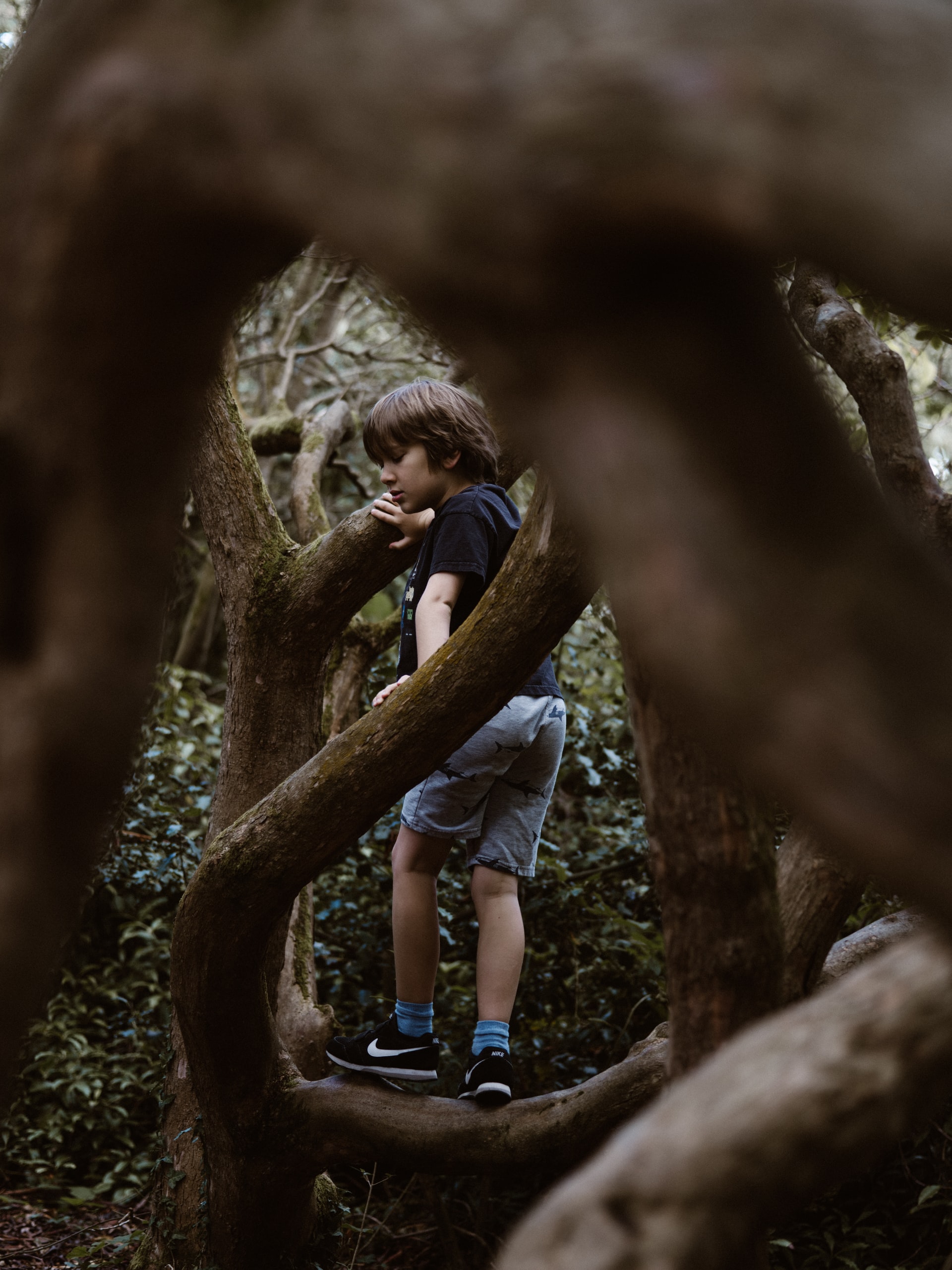
The Risk principle: this explains the need for taking risks while managing safety and accessing support. It means learning about a risk-benefit process where participants grow in confidence as they attempt those challenging activities. Sometimes we forget how much we used to like climbing trees, digging holes in the ground, hunting minibeasts and being in the presence of fire.
The Holistic Learning principle: this is about bringing together the different aspects of learning and areas of development, seeing the human being as a whole instead of fragmented. It means not only fostering cognitive skills, but also emotional, communication, social and creative skills. And many other values as well, such as resilience, cooperation, independence and a sense of groundedness.
The Leadership principle: this refers to the qualifications and training required for running sessions, but also to having the attitude of a learner who is in constant learning. Reflecting on what is done and observing carefully in order to make sure the space that is created is safe, nourishing and suitable. I would even add that this principle could embrace the idea of the leader within each of us, awakening the possibility to voice ideas, share and connect.
The Community principle: although in forest schools there is a more learner-centred approach, it also contributes to building a community via shared learning and development. That means considering the learners, their interests and needs, as well as making decisions together, holding dialogues and establishing a sense of the collective. It invites us to go beyond our own selfish tendencies and open our hearts to trust in navigating with others on board.
These principles echo the ideas of many earlier educational thinkers. It is always important to acknowledge the contributions of philosophers, naturalists and educators to what we know today in terms of Forest Schools, so I will briefly mention some of them.
In the 1950s, a Danish woman called Ella Flautau started taking her own children and their friends into the woods daily for play and learning. Many other parents liked the idea and it developed into the first recognized forest kindergarten. The focus was child-led and understanding learning as an outcome of play in the outdoors, regardless of the weather, as well as bringing social skills, resilience and connection to Nature.
In the 1990s, the concept was brought to the UK after British educators had visited Denmark and seen the benefits. From there, the model spread internationally and evolved into the forest school approach we know today.
Another influence came from Kurt Hahn (1886–1974), a German educator who believed that society was playing a role in corrupting young people. He held that young people needed to develop leadership skills, and that outdoor experiences had an important part to play in this. He founded schools where the curriculum emphasizes an experiential approach. Hahn emphasized learning through direct experience, especially in natural environments, rather than only through classroom teaching. He also believed that outdoor challenges help to build resilience, teamwork and moral strength.
Another important figure was Susan Isaacs (1885–1948), an English educational psychologist and psychoanalyst, who emphasized the importance of developing independence via play, making adults and/or teachers assume a role of guidance. Her focus was child development, play and exploration; ideas that are embedded in the ethos of forest schools.
In 1989 and with the aim of improving the outcomes in literacy and maths, the national curriculum was introduced in the UK. Before that, teachers used to make the decisions on how and what to teach. However, as a response and in opposition to this teacher- and outcome-centred approach, other new alternative provisions started to emerge.
Leslie Paul (1905–1985), an Irish writer and founder of the Woodcraft Folk, whose philosophy gravitates around educating and empowering young ones to become active citizens. His emphasis was on immersion in Nature, child-led exploration, social responsibility and community, and learning through experience. Some of these ideas resonate a lot with the other figures mentioned, and there is an emphasis on promoting activities such as camping, hiking, learning about Nature, storytelling and cooperative games. These contribute to fostering respect for the natural world, community spirit and democratic values.
Another major influence was Maria Montessori (1870–1952), an Italian doctor and educator who contributed the idea of sensory exploration and allowing children to be free in an environment that has been designed to respond to their needs. Many of her educational principles overlap with and influenced later child-centred approaches, highlighting the need to nourish the child’s autonomy and promote hands-on learning.
In the early 21st century, more training became available and Forest Schools started to spread even more. As things developed, more clarity about the expectations was achieved in terms of qualifications, ratio, aims, principles and more. This is the work that the FSA has continued to carry out.
Through the Forest Education Initiative, the Forestry Commission supports research and many networks have been established to assure quality, review processes and consolidate ideas more nationally. The six core principles described earlier were introduced in 2011 and are meant to be of equal importance, so sessions must aim to address them all.
Having experienced the training myself and currently learning more about the positive benefits of offering such an education, brings me some sort of hope that future generations will go back to Nature and find there the answers to many of the questions we are facing today. I can see how different the role of the educator is and how it requires them to accept that they don’t have full control or responsibility over the learning. Over the years as an Early Years Teacher and Home Educator, I also found that learning is more likely to happen when children have an interest in and curiosity about a particular topic, rather than following a pre-arranged plan . I keep discovering how fascinating learning can be when children are guiding it somehow, and we are able to guide, support and participate in the learning experience too. Embracing this new way of being a teacher can be hard for some more traditional styles where the adult knows, and the child doesn’t. I rather think of learning as a bridge that helps the child access new things, new ideas, new ways of understanding things, but with the child having to walk on that bridge by their own volition. So, if we want children to grow up resilient, creative and deeply connected to life, perhaps the first step is simple: let them return to the woods.
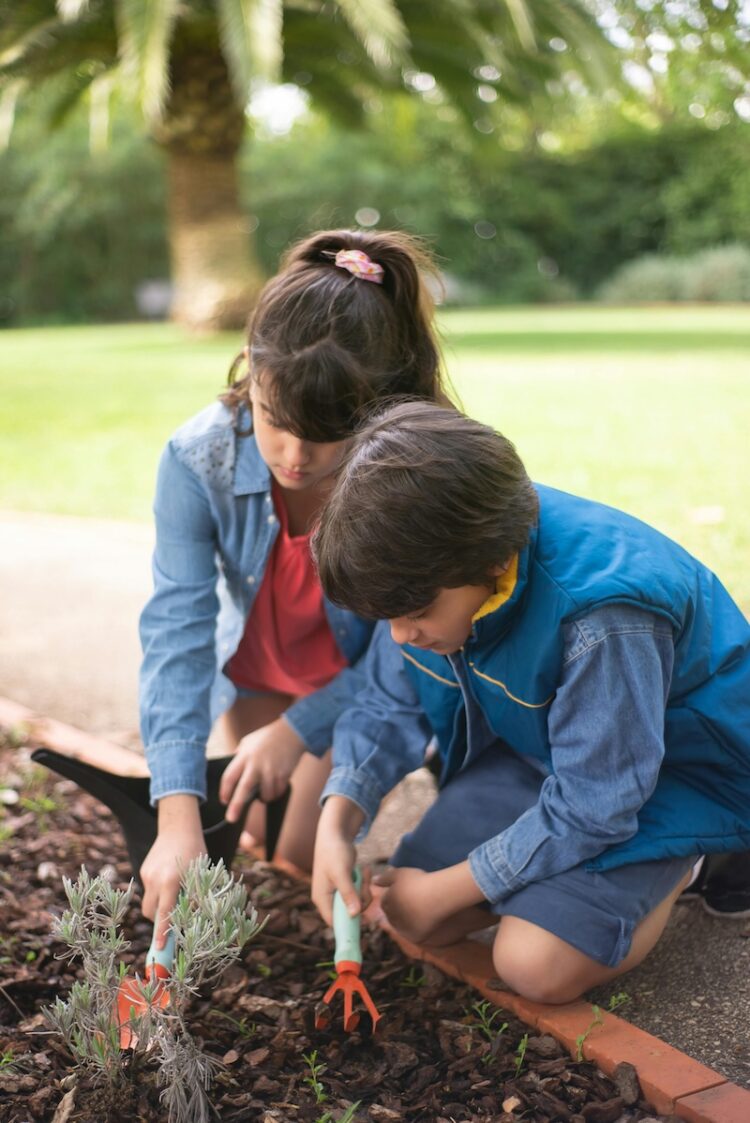
Image Credits: By Kampus Production | pexels | CC BY PD

What do you think?