In Search of Harmony: a Mythic Journey Across Cultures.
Article By Nataliya Petlevych
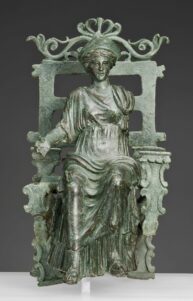 “Harmony is the source of manifestation, the cause of its existence, and the medium between God and man.” Hazrat Inayat Khan
Throughout history and across civilizations, harmony has been an eternal companion to humanity. No age or culture has existed without its presence. It has taken form as a goddess – Harmonia, Concordia – or has been present as a divinity of truth, order and justice – Ma’at, Asha, Themis. Sometimes, it has been embodied in a nurturing force – Nuwa, Lakshmi, Saraswati – caring for the world and humanity, or as a civilizing deity or hero – Quetzalcoatl, Enki – establishing the foundations of order, giving knowledge and structures of life.
The myths weave the stories of the beginning, when the primordial forces set creation in motion. Before even time existed, law and truth were present in the nascent universe. Ancient Egyptian Ma’at, the embodiment of truth and harmony, ensured that life unfolded in a just and balanced flow, preventing collapse into chaos. Asha, the Zoroastrian principle of divine order, inscribed righteousness into the fabric of existence, guiding creation toward the light of truth. Even when the order fractured, the power of life and balance restored it. Caring for her children, Chinese Nuwa repaired the broken pillars of heaven, crafting a world where equilibrium returned.
The immutable laws of nature were established, harmony reigned and existence thrived under its rhythm. The ancient Greek Titaness, Themis, provided Zeus with wise counsel to maintain the just order of the world, and her children, the Horai, ensured it for the whole of manifestation: each representing fair judgement and justice (Dike), good order (Eunomia) and peace (Eirene). The Sumerian Lord of the Earth, Enki, became the keeper of Me – the gifts of civilization, a collection of divine laws governing the universe, society and humans that ensured harmony between all beings. Thus, the ancient wisdom taught that harmony is the force that holds the universe together, unseen but omnipresent.
But no order remains untouched by disruption and the wheel of time devours established balance. As life unfolded and humans populated the world, discord grew. Isfet, the adversary of Ma’at, sought to unravel the strands of justice. Druj, the whisperer of deceit, waged an unrelenting war against Asha’s luminous order. Eris, the mischievous goddess of strife, accompanied many conflicts and cast her golden apple among the gods, igniting a fire of discord that ultimately led to the Trojan War.
Yet in this world of dualities within the conflict of opposites lay a deeper revelation. Opposing forces move life and provide a choice to us of what to create, since harmony, like life is not static, but dynamic and requires renewal over numerous cycles of time. Harmony does not shy away from the conflict of opposites, but channels their energy to create a new order. As the ancient Greek myth tells us, Harmonia herself, born from the union of Ares and Aphrodite – war and love – embodied the truth that harmony is not the absence of struggle but its reconciliation. The myth contains another revelation: not all opposition ends in harmony. Ares and Aphrodite had other children – Phobos and Deimos – Panic and Terror. Harmony, then, is not a given – it must be sought, cultivated, and understood.
But how does one attain it? How does one receive its gifts?
Throughout history, civilizations have invoked harmony as the foundation of just rule and societal well-being. In the courts of the Pharaohs, Ma’at was perceived as a living principle, the heart of governance and law. In the halls of Rome, the statesmen turned to Concordia. Her temple at the foot of the Capitoline Hill served as meeting place for the Roman Senate at the critical moments of history, embodying the aspiration for fairness and the possibility of reconciliation and unity in the face of divisions. Harmony intertwined with truth and justice was not a distant dream but a principle upon which the civilization could develop, like the universe at the beginning of time. It could nourish solidarity and reciprocity for the life of communities and the state to flourish. When its laws were honoured, prosperity followed; when abandoned, discord took root.
However, the true dwelling place for harmony is the human soul. The sages of old taught that the world’s harmony must first be cultivated within. The wise knew that harmony was not an external gift but an individual achievement. The ancient Egyptian scales of justice weighed the heart of a deceased – a lifetime’s worth of choices – against Maat’s feather of truth. It was during life that a human being had a chance to work on themselves, on their weaknesses and impurities, and reconcile inner conflicts so that their heart would become a light abode of virtues, and their life a true manifestation of the harmony between their aspirations, thoughts, feelings and actions.
The ancient Greeks tell another story of harmony earned through self-refinement – the story of Cadmus, a legendary founder of Thebes, who with the help of wisdom (Athena), after being initiated in the mysteries, was granted the right to marry Harmonia. And their wedding was an unsurpassable feast, with all the gods attending, rejoicing and bringing gifts. And their life afterwards was a glorious and happy union and adventure, culminating in their ascension to Elysium.
Harmony, though seemingly distant, never truly vanishes. It is hidden in the rhythms of nature, in the wisdom of ancient texts and myths, in the silent yearning of the human heart. Ever-present and elusive, it is calling, waiting to be remembered, to be reclaimed, to be restored again and again in our world.
Image Credits: By raw pixel | CCBY PD
Related posts:

Image References
By raw pixel | CCBY PD
Permissions required for the publishing of this article have been obtained
Article References
David Leeming. The Oxford Companion to World Mythology (OUP, 2005) Geraldine Pinch. Handbook of Egyptian Mythology (ABC-CLIO, 2002) Robin Hard. The Routledge Handbook of Greek Mythology (Taylor & Francis, 2020) Huang Dehai. Illustrated Myths and Legends of China. The Ages of Chaos and Heroes (Shanghai Press and Publishing Development Co., Ltd, 2018)
A beautiful article genuinely bringing together the idea of harmony across cultures, drawing on its various depictions to weave a harmonious tapestry of insight and inspiration.