The influence of esoteric philosophy on history and society
Article By Julian Scott
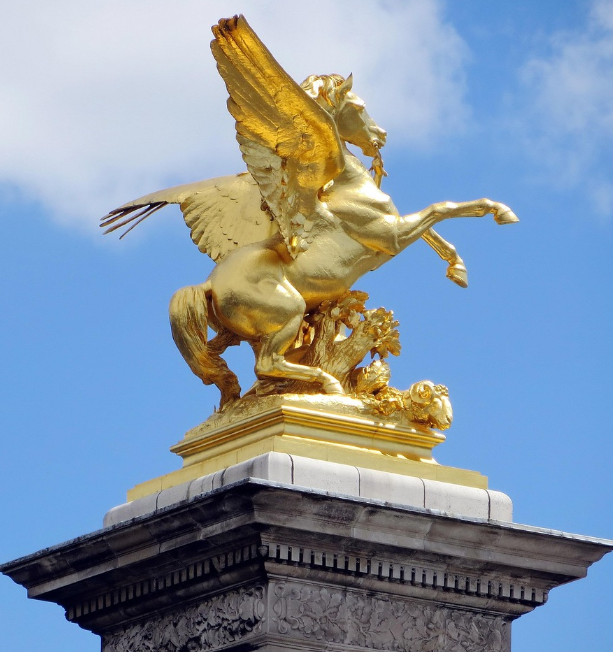
Image representing – The transformation of oneself from lower into higher, from a ‘man of lead’ into a ‘man of gold’
The word ‘esoteric’ probably gives the impression of something obscure, reserved for the few, and having little resonance in the world outside some small, perhaps élite circles. However, nothing could be further from the truth. What I would like to show in this article is that, despite the fact that the word ‘eso-teric’ means ‘going inwards’ (towards the deeper causes of things), esoteric philosophy has always been an outward-going (as well as inward-looking) philosophy that has sought to bring practical benefits to the world.
Let us start with its principles, which are also its aims: 1) ‘the brotherhood of man’ or universal fraternity, based on the belief that all human beings are sparks of the divine and share a common human reason; 2) ‘eclecticism’, meaning an openness to different forms of thought and belief and a willingness to study in different sources in search of truth; 3) the transformation of oneself from lower into higher, from a ‘man of lead’ into a ‘man of gold’; 4) the will to work with nature, of which the human being forms an integral part, using scientific discoveries to improve the lot of human beings on earth, while at the same time considering all life forms to be equally valid and therefore not exploiting them.
Because of the restrictions of space and the limits of my own knowledge, I am going to confine myself to a study of this phenomenon in Europe, over the period of around 700 years from the 9th century to the 16th. But esoteric philosophy is a worldwide phenomenon, so the same principle would most likely apply everywhere and at all times in history.
Let us begin, then, in the so-called ‘Dark Ages’ of Europe, though at a time when some light began to shine: the times of King Alfred in England and the Emperor Charlemagne in France and Germany, and their successors. A figure appeared “out of the darkness like a meteor” (in the words of medievalist G.G. Coulton) in the 9th century, whose name was John Scotus Eriugena. He was head of the ‘Palatine School’ in France for 30 years, leading 50 international scholars in research and the propagation of knowledge at a time when even kings were often illiterate. Here are some of his teachings, which reveal his very ‘un-Dark Age’ spirit:
- There is no eternal damnation, because such a concept flies in the face of the idea of a loving God.
- The supremacy of reason over biblical authority, in other words, freedom of thought.
- The ‘superessentiality’ of God, i.e. the idea that God cannot be a ‘being’, otherwise ‘He’ would be limited to certain characteristics, and God, being infinite, cannot be limited.
Such teachings got him into trouble with the Church, and his books were condemned three times by the Papal authorities. He is said to have been murdered by his own students when he returned to England, who stabbed him to death with their quills.
Being such an influential figure, he had an immense effect on the thinking of the time, opening people up to free thought, love of knowledge and love of one’s fellow human beings. The Dark Ages would have been much darker without him and his supporters.
Let us move on in time until the 12th century. This was a time of cultural flowering in many respects – a time when the ideals of chivalry made their appearance, along with the concept of ‘courtly love’ and the cult of the Virgin Mary, which reintroduced the value of the feminine into an overly masculinized world. It was also the time when the Gothic cathedrals began to be built – those soaring, light-filled edifices, rich in symbolism and, some say, alchemically manufactured glass.
It was also the time of the foundation of that mysterious order of warrior-monks, the Knights Templar, who not only protected pilgrims on their way to Jerusalem, but also established large estates of land all over Europe, which were exceptionally well managed. Research has shown that, when their land was confiscated after 1308, new managers took over, who exploited the land and workforce, reducing it to a ruinous state[1]. The Templars are also renowned for introducing the system of cheques into Europe, thus freeing up trade and exchange. Little is known about the esoteric aspects of the Order, but they are believed by many to have had esoteric teachings and rituals. What was noticeable was their superior organization, discipline and efficient administration, and the high moral standing of some of their members, such as William Marshal, buried in Temple Church in London, and known as ‘the greatest knight that ever lived’. The Templar Knights were instrumental in bringing into being and enforcing the Magna Carta, the legal document that first established the Rule of Law and granted the right of a fair trial in England.
The ideal of chivalry in general can be regarded as a fruit of esoteric philosophy[2], if we consider the various elements that characterize it: the trials that a knight has to pass through, often of a mystical nature, as in the stories of Parsifal; the transition from earthly love to heavenly love (from courtly love to the quest for the Holy Grail); and the symbolism of the knight and his horse (the human mastering the animal self). As the occultist J.E. Cirlot writes in his Dictionary of Symbols: “Knighthood should be seen as a superior kind of pedagogy helping to bring about the transmutation of natural man (steedless) into spiritual man.”
As for the effects of the Ideal of Chivalry on the medieval world, it was immense: it transformed the figure of the simple warrior into a ‘noble knight’ and introduced greater refinement into medieval society. The values of the knight were no longer just strength and power, but the cultivation of virtue and the protection of the weak against the strong.
How did this movement come about? One of the main centres of the cultivation and dissemination of the chivalric ideals was the court of Eleanor of Aquitaine at Poitiers in France. It became a centre of poetry and a model of courtly life and manners. From there it spread to England, when she married the future Henry II. When he became king in 1154 she played a very active role in government for almost two decades. Is it coincidence that Henry II was a great supporter of the Templars, giving them the land for their famous Temple Church in the city of London? Or that in his reign the Jews, persecuted for centuries and finally expelled from England by Edward I in 1290, experienced the era of greatest toleration? The harmonization of differences is one of the hallmarks of esoteric philosophy throughout the ages.
Another king with even stronger links to esotericism was Alfonso the Wise (Alfonso X) of the kingdom of Castile and León in Spain. To cite just one example, he commissioned a a compendium of esoteric texts called The Book of Astral Magic. Under his reign too, the Jews were more protected than at any other time and played an important role as scholars and translators, financiers and administrators.
Now let us move on to the age of the English Renaissance, in the time of Elizabeth I. The esoteric movement there was led by John Dee, astrologer to the Queen, famed magician and at the same time a brilliant mathematician. He was at the centre of a circle of poets, navigators and scientists, as well as occultists. According to Frances Yates, he was the driving force behind the Elizabethan Renaissance.[3] Elizabeth herself was interested in the occult philosophy, as shown by the fact that when Dee published his esoteric work Monas Hieroglyphica, she asked him to come and explain it to her personally.[4]
Two well-known figures under Dee’s influence were Sir Philip Sidney and Sir Walter Raleigh. The first was a poet, soldier and courtier. He led the ‘Sidney Circle’ which cultivated Neoplatonic philosophy and occult studies. His circle gave a warm welcome to the Italian philosopher and occultist Giordano Bruno, who refers to himself in one of his works as: “a proclaimer of a general philanthropy, who does not choose out the Italian more than the Briton, the male more than the female, the mitred head more than the crowned head… but him who is the more peaceable-minded, the more civilized, the more loyal, the more useful…”. The esoteric philosopher looks beyond external appearances to see the virtues within, or the lack of them.
Sir Walter Raleigh was the founder of the colony of Virginia in America. According to Alan Gallay, author of Walter Ralegh: architect of Empire: “Inspired by the philosophy of hermeticism, Raleigh believed that England could build an empire without the conquest of native peoples, an empire in which English settlers and American Indians would live together, or, alternatively, where natives became allies and England would not interfere with their way of life.”[5] Once again this sentiment shows the benevolent influence of esoteric philosophy in every age.
With these few examples we can see how an enlightened ruler, inspired by and at the same time protecting and supporting one or several esoteric philosophers, can bring about profound and positive changes in society. The mythical model for this is King Arthur (the benevolent ruler) and Merlin (the magician/wise counsellor). Perhaps there are no enlightened rulers around at the moment, but this doesn’t prevent us from cultivating esoteric philosophical values in ourselves, encouraging them in others and taking every opportunity to spread their beneficent influence in the world.
Related posts:



Image References
Free for use under the Pixabay Content License
Permissions required for the publishing of this article have been obtained
Article References
[1] Medieval Histories: The Templars Land. www.medieval.eu/knights-templars-land/ [2] See The Esoteric Aspects of Chivalry in New Acropolis Magazine, Issue No. 27, March-April 2018 [3] Yates, F. The Occult Philosophy in the Elizabethan Age. Routledge, 2001 [4] See The Occult Philosophy in the English Renaissance in New Acropolis Magazine Issue No. 31, Nov-Dec 2018 [5] Walter Ralegh: architect of Empire, by Alan Gallay
What do you think?