SEEDS FOR A NEW RENAISSANCE: An interview with Julian Scott
 We talked last summer with Sabine Leitner about her new book, An Invitation to Think: Philosophy for Head, Heart and Hands, the first publication under the Eclectic Books publishing label. She described the purpose of Eclectic Books as being to disseminate ‘living ideas’, seeds if you like, to take root within us, to grow and help us navigate our lives to better effect. And here we are now, Julian, with your new book, Seeds for a New Renaissance: Inspiration for Reimagining the Future. And a thing of beauty it is too.
Yes, indeed, I’m really pleased with how it has turned out and I very much hope that readers will enjoy it and keep coming back to it. Sabine’s book was broadly her own thoughts inspired by all her studies over the years of philosophy in New Acropolis, particularly about topical subjects of the day − a living philosophy.
Seeds for a New Renaissance is also about a living philosophy, but more from the angle of the vast heritage of human wisdom, which goes back thousands of years, across so many different fields. What I’ve tried to do is to bring together in an eclectic fashion many inspiring treasures of human endeavour from the past – from culture, philosophy, nature, religion and myth, esotericism, art, politics and society – and apply them to the present. And I would just like to say that, for me, the main thing about this book is that if you read it, you will come out feeling happier than when you started!
As your editors, we can only agree! We’ve both experienced a sense of well-being and inspiration, working on the book.
This is interesting, isn’t it? Because why would we get a sense of well-being by delving into the past? Perhaps because Seeds for a New Renaissance deliberately seeks out insights and ideas that are intrinsically ‘good’ and that can actively help us today, reinforcing a sense of faith in humanity. In timeless philosophy there are ideas that really don’t change over time, because there are some things in the human being which also don’t change over time.
The figure who keeps coming to my mind in this regard is Mencius, a Chinese Confucian philosopher, whose main stance was the philosophy of benevolence. It can’t really be said that benevolence only applied in ancient China; it is obviously very much needed today. What these philosophers really do is clarify things − in this case, what we mean by benevolence and how we might apply it. Great philosophers bring this piercing clarity into everything they say, in a way that can be immensely helpful to us today, if we are prepared to look and learn.
And perhaps another reason for Seeds for a New Renaissance evoking this sense of well-being is that the veritable panorama of treasures that you have assembled appeals to all aspects of the human being – illuminating to the intellect, warming for the heart and practical in its applications to life. Julian, how would you suggest that your readers best use and enjoy the book?
I think the best way to use this book is to read it slowly. Either just take a topic which you find interesting or start at the beginning. But don’t try and read the whole thing in one go, it would be like having a feast, and you will come away feeling too full and drunk, and you won’t feel so great afterwards! Whereas if you take it slowly, you can savour all these things and let them sink in.
And that savouring is aided, is it not, by some beautiful pictures?
Yes, in this book readers will find some 70 illustrations to illuminate their way, a mix of beautiful pictures and artefacts from the past and the present, and a few pictures of modern philosophers such as Karl Jaspers, Hannah Arendt, John Locke, and so on. I think they bring the book to life somehow. One way I think of this book is as a kind of ‘living museum’. Sometimes, if I’m feeling in need of inspiration, I’ll wander off down to the British Museum and just walk around and look at things, and I always come out feeling quite uplifted and inspired. So this book is like a living museum, because for me a museum is not something just from the past, it’s something that gives us inspiration for the present and hope for the future. And that’s the underlying theme of this book, really − inspiration and hope, a feeling of optimism.
This feels very strong, this notion of ‘living ideas’ and ‘living museum’ and the sense of underlying hope and inspiration. But also running through the book is a compelling sense of urgency and the need right now for nothing less than an individual and collective renaissance. Do we hear you right? Why is this so clear to you?
Well, just to put it in a nutshell, I think that our culture, our civilization, our society in general, has come up against a brick wall. We tried many things in the 20th century; all sorts of ideologies came into being. These ideologies didn’t work out, but somehow, we’re still repeating the same kinds of ideas, which are all based on recent Western philosophy on how people can live better lives. So, it all started off with good intentions, but my feeling is that we are now stuck. And we need to break through into another way of thinking, another way of being, another way of feeling, which is not only intellectual, not only political, not only a gut reaction − but something which combines all those aspects of the human being into one. And so that would be, precisely, a living philosophy, an eclectic philosophy, because we need to bridge all the gaps and the divisions between human beings, and this is what eclecticism is about.
The book speaks powerfully about Nature as a living being. Might you say a few words about that now, Julian, as it ties in closely with what you have just been talking about.
When planning the book, we thought of all the different sections we might have. If you have philosophy, religion, art, history and politics, you should have science as well. To be frank, I’m not really a great scientist and I cannot legitimately write a whole section about science. But I can write about Nature, because I love Nature and I can observe Nature. And obviously science and Nature overlap, because science is the knowledge of Nature. So, in the section about Nature, I’ve focused more on the symbolism of Nature and explored some fascinating questions such as ‘Do Animals have Souls?’, ‘The Language of Birds’ and ‘The Living Energies of Water’. It’s all based on scientific research, but it’s open to, let’s say, the hidden side or the more poetic side of Nature. I would say that this is my approach to Nature.
And nowadays we’re becoming painfully aware of the damage that we’re doing to Nature. Sitting here now in our school, we are privileged to look out onto a beautiful public garden. It is abundant with trees, but quite a few have died in the last few years, due to factors like climate change, pollution and soil depletion. Which takes us back to your earlier question, the sense of urgency that humanity now needs to carry because we are doing so much damage to the world. There are all these wars going on now, so much suffering; we really need to rethink where we are going. One of the main problems, which prevents us from going forward, is that humanity is very much in a state of confusion, perhaps more so than at any other time in our existence. We don’t really know what we’re doing, where we’re going. We’re confused about many things. This is why philosophy in the classical tradition is so valuable, because these philosophers give us clarity about some fundamental principles, without being fundamentalists. And eclectic philosophy is not fundamentalist, but it does seek to discover some fundamental principles.
This theme of the ‘natural’ also imbues your ideas on culture, does it not? Cultivating culture, the roots for a culture, ensuring those roots grow healthily. Indeed, you lead off the book with a section on ‘Culture’. Why did you choose to do that?
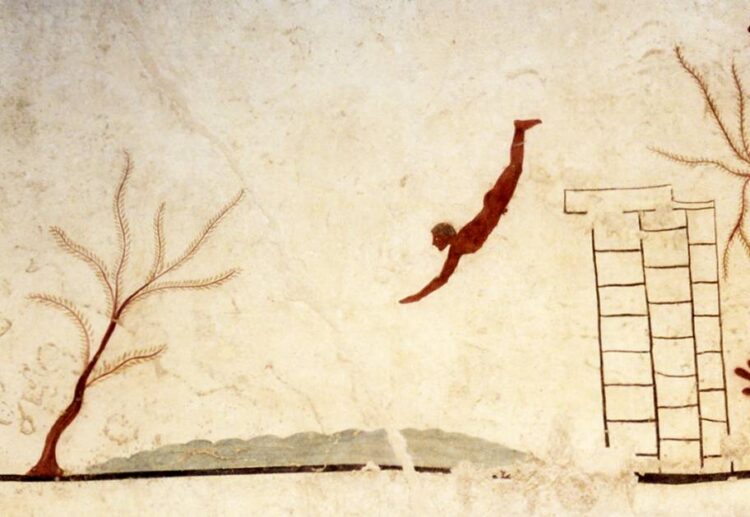
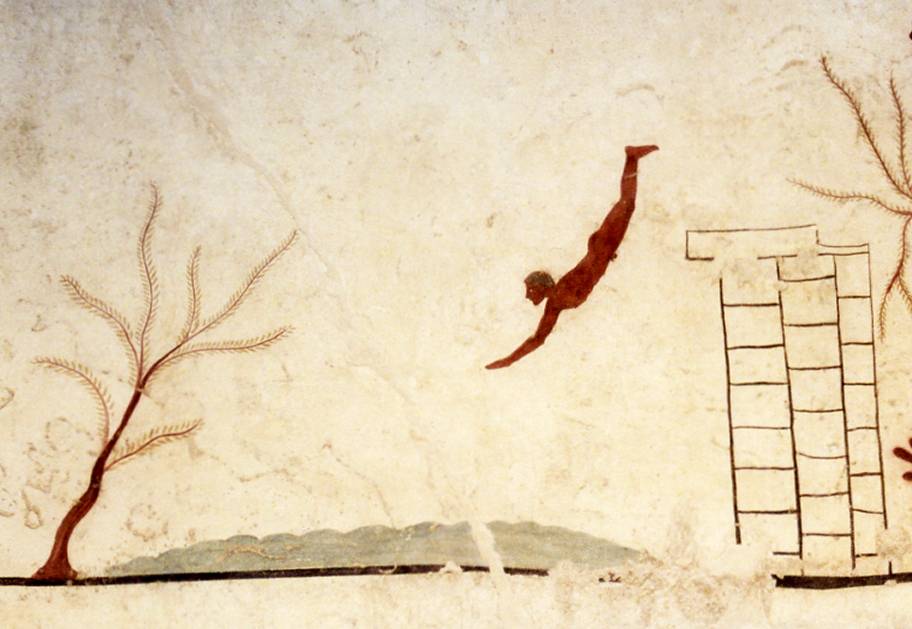
Well, originally, this book was going to have a different title, ‘Diving into the Ocean of Culture’. And we’ve retained on the front cover a beautiful image of a figure diving into water, with a tree growing beside it. For me, this encapsulates the whole idea of the book − we’re diving into an ocean of culture, all that human beings have cultivated within themselves and in the outside world throughout time; we’re immersing ourselves in that enormous field of knowledge and wisdom. And in doing so, we can find the seeds for a new renaissance, symbolized by the tree on the left of the picture, because only by going into the depths of the soil or the depths of the past, can we find the deeper seeds, the more profound answers that will help us move forward today. If we just focus on the present, we end up saying we have a problem and only focus on the problem, never getting out of the problem. Somehow, we need to detach and abstract ourselves from the problem and look at it from a bird’s eye view.
And Seeds for a New Renaissance really helps us to do that – to take a bird’s eye view in the rafters of the ‘living museum’ and then choose where to dive down to explore more closely an idea or dilemma, a philosopher, an artist, a historical trend, whatever might take the reader’s interest.
I hope so. And, as you mentioned earlier, we are not just thinking here about the ‘outer’ world, we are also seeking seeds to nourish our inner renewal and renaissance, both individually and collectively. Many of these philosophers − the Stoics, Plato, Plotinus, Confucius, for example − offer us a sense of serenity. And Aristotle addresses happiness: how can we be happy? So there’s much in the book to help us find not only an orientation in the world, but also a kind of inner orientation to help us go forward in life and develop ourselves − and to do so in harmony with others, because it’s not just about developing ourselves in isolation; it’s much better, and actually brings more happiness, to develop ourselves alongside others, in community, witnessing other people develop as well.
Julian, Seeds for a New Renaissance draws together much of your writing and reflection over the last ten years or so. As these words and thoughts have emerged in that period, what has stirred in your consciousness? What have you most noticed develop in your own appreciation and understanding of humanity and the universe? What has shifted, or remained firm, in your stance in the world?
A very good question! Well, I think these ideas have been germinating in me for 50 years, ever since I started studying philosophy at New Acropolis; and over that time, I have certainly changed some of my views and attitudes and hopefully matured a bit too! As to the last ten years of writing the essays collected in Seeds for a New Renaissance, three interlinked themes have become much clearer to me. Firstly, the hugely important and positive influence of esoteric philosophy on history, culture and the world; secondly, the sense in which philosophy, literally the ‘love of wisdom’, can join and bind everything together, in a spirit of love; and thirdly, the power of eclecticism, in seeking to “examine everything and hold on to what is good” in the words of Philo of Alexandria. Esoteric philosophical movements have, on the whole, really changed the world for the better. They were eclectic in the sense that they were very tolerant and open-minded, and they really tried to bring together different sources and ideas, in a highly non-sectarian manner. Giordano Bruno, who figures in the book, is a very good example of this. He once said something like, “I do not care whether you are a Briton, an Italian, a German, or whatever; what I am concerned about is whether you are a good person, a virtuous person.” And for me, that is what eclecticism is all about – looking for the good, the beautiful, the true and the just and, wherever that is found, bringing it all together in a spirit of love.
Well, you have certainly done that in this book, Julian – the good, the beautiful, the true and the just brought together in a lovely, illustrated whole.
Finally, Seeds for a New Renaissance is the third publication under the Eclectic Books label, following Sabine Leitner’s An Invitation to Think and Fernand Schwarz’s Egypt, Mirror of Heaven earlier this year. What can we now look forward to in the next year or so?
Yes, the Eclectic Books label has some momentum now. In the coming months we will be publishing two further books. The first is called Art and the Emotions and was written by C. Jinarajadasa, fourth president of the Theosophical Society. Full of insight on the nature of beauty in art, music and literature, the book will carry an introduction by Sabine Leitner, drawing on her leadership for the last 14 years of the International Tristan Institute for Music and Arts Education. And I will be editing a selection of writings by the cultural historian Christopher Dawson about what shapes the movement of history. Writing in the mid-20th century, Dawson took a different approach to many of the historians of his time, in that he advocated that it is not just economic factors or power struggles that drive history, but more fundamentally ideas and beliefs.
And Eclectic Books will continue to enjoy growing organically and collaboratively – and thank you so much Julian and Sian for your energy and vitality in mobilizing this effort – as we look for our next ideas and recommendations for 2027, including a work framing the nature of heroism in the 21st century.


What do you think?