Are We Morally Prepared for Crises?
Article By Sabine Leitner
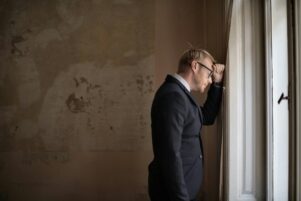 In March 2025, the EU advised all its 450 million citizens to prepare for potential crises like war, cyberattacks, a major disease outbreak and natural disasters. Brussels issued detailed guidelines for survival kits, including food, water, first aid items and torches to last 72 hours and some countries, like France and Germany, were distributing materials and encouraging families to convert cellars into bunkers.
This recommendation signals a shift from a reactive approach to a more proactive one, and it is part of a broader effort to build a more resilient and prepared population, so that most citizens can be self-sufficient for 72 hours while allowing emergency services to focus on those most in need during the initial stages of a crisis.
I am writing this in June 2025, and the recent news of escalating conflicts, wars, blackouts, riots, sky-rocketing government debts and increasing global economic instability seem to confirm the urgent need to ‘get ready’. But I think that there is even more at stake than the loss of lives, livelihoods, goods and possessions. We could also, quite easily, lose our humanity, our dignity and many other elements that are vital for the continuation of civilization.
Emergencies are very stressful and often life-threatening situations where the normal rules of behaviour disappear and a deeper layer of our human nature becomes exposed. These moments of crises reveal the character of individuals as well as of cultures and systems. We might not even know ourselves what lies beneath the surface of our own ‘thin veneer of civilization’. Would our instinct-driven, selfish and violent animalistic nature come out or would we remain upright, aligned with our values and capable of thinking of others as well as ourselves?
Holocaust survivor and psychiatrist Viktor Frankl wrote: “There are two races of men in this world: the ‘race’ of the decent man and the ‘race’ of the indecent man.” And to Confucius is attributed the quote: “Only in winter do the pine and cypress show they are evergreen.” This implies that there are, and have always been, individuals who have shown courage, compassion and dignity in moments of severe adversity.
When the masks fall away and the norms break down, it can go both ways. There are many interesting studies of group behaviour in disasters. During Hurricane Katrina in New Orleans in 2005, for example, there was a complete breakdown of social order with looting and violence in the streets, rumours of rape and murder circulating and racial and class tensions rising to the surface. Katrina is often cited as an example of how people can ‘go feral’ when systems break down. The key insight was that without leadership (and it is widely acknowledged that the government responded late and poorly), without trust and coordination, fear and survival instincts take over.
The opposite example comes from Japan during the time of the earthquake and subsequent tsunami that led to the Fukushima nuclear crisis in 2011. There was remarkable calm and order, no looting reported at all (even with mass displacement and power outages). There was civic discipline with long orderly queues for supplies and people took only what they needed (!). Survivors checked on neighbours, shared food and worked together and youth volunteers and even elderly citizens joined cleanups and rebuilding efforts. The key insight from this study was that strong social cohesion, a culture of respect and an ingrained sense of duty were able to create an atmosphere of dignified endurance.
The conclusion is that we human beings are capable of both brutality and nobility; and what emerges in a crisis depends on our values (individual and collective), social cohesion and leadership. Even in chaos, there are always those who are able to remain composed and who can act in a dignified way. A good example of dignity is the Elizabethan poet, scholar and courtier Sir Philip Sidney who, slowly dying from a gunshot wound aged 31, gave his water-bottle to another wounded soldier with the words: “Thy necessity is yet greater than mine.”
We not only need to prepare our material emergency bag but also our moral survival kit and always keep in our consciousness a set of principles, values and inner tools that can help us act ethically and stay human in times of crisis, chaos or uncertainty. We will need our moral compass, empathy, critical thinking, courage, solidarity, historical memory and a good dose of hope.
A full larder is useful; but knowing with clarity and conviction what kind of human being we want to be in moments of crisis might be even more useful…
Image Credits: By Andrea Piacquadio | Pexels | CC BY PD
Related posts:

Image References
By Andrea Piacquadio | Pexels | CC BY PD
Permissions required for the publishing of this article have been obtained
What do you think?