The Homesick Philosopher: Living Between Two Worlds
Article By Laszlo Balizs
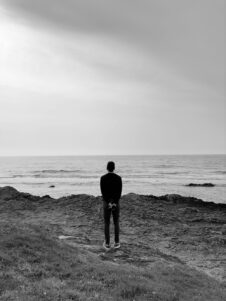 There is a kind of quiet battle that rages in the hearts of many who have left their homeland to seek a life elsewhere. For some, it’s a practical journey. For others, like myself, it is a path that feels marked by destiny, as if some whisper from beyond had once called out and said, “This is the way.”
I was born and raised in Hungary, a land steeped in rich history, poetic depth and cultural elegance. My love for it has never dimmed. In many ways, I consider myself a patriot. I cherish the Hungarian language with its rhythm and richness, the folk traditions, the wit of our poets, the weight of our history and the quiet resilience of our people. It is where my roots lie, tangled deep in the Danube’s flow and the soil of my ancestors.
And yet, for more than fifteen years I have lived in England.
It is not a matter of rejection or escape, but a journey of calling. This path has always felt more than circumstantial. As a follower of the Platonic school of thought, I believe in the notion of the soul’s journey not merely from body to body, as the ancients might have said, but from idea to realization, from shadow to form. Living abroad, then, becomes not an abandonment of my past but an attempt to walk toward my personal telos, my purpose, however hazy its edges may be.
Plato once spoke of the soul as a charioteer pulled by two horses: one noble, one unruly. I feel this image daily. One horse pulls me back to Hungary to my mother, who still lives there, to my sister and her husband and their two children, whom I love to bits and miss more than words can carry. To the streets I walked as a child, the language that shaped my thoughts and the cultural rhythm that still pulses in me even as I sip tea under grey, rainy English skies.
The other horse pulls me forward, towards growth, towards the fulfilment of a vision I have always felt deep within, even if I cannot articulate it fully. England has given me space, opportunity, challenge and the environment to become what I feel I must be. This does not mean it is easy, nor that the path is always clear. But I feel the pull of purpose.
Still, between these horses, the soul is strained. The question is not merely where to live, but how to live. How does one remain whole while divided across two lands?
There is a compelling spiritual argument, notably expressed by Rudolf Steiner, that one’s task is to raise the light – or to elevate the consciousness – in the land where one was born. According to Steiner, our soul is born into a particular nation, culture, and language for a reason. These are not accidents, but deliberate settings in which we are meant to unfold spiritually and fulfil a collective task. To leave, then, is to risk abandoning that sacred responsibility.
I have often wrestled with this thought. It resonates with my deep love for Hungary, its spirit, its land and the people who continue to shape it. I wonder sometimes: am I meant to be there, helping to raise the collective soul of my homeland? Am I, in living abroad, walking away from my true task?
And yet, another truth persists in me, one that aligns more with the Platonic concept of the soul’s personal daimonion, the inner guide that points not to duty as defined by geography, but by essence. Sometimes, it seems, the light we are called to raise must be kindled elsewhere, so that we might one day return stronger, or perhaps so that we may spread the essence of our culture and values far beyond our birthplace.
There is no easy resolution between these two views. They stand in tension: one calling us to ground ourselves and elevate our birth-soil, the other drawing us outward toward our individual telos. I carry both voices within me.
There is no silence quite like the one felt on a quiet evening abroad when you miss your family. It is not merely sadness, it is ontological. It is a homesickness of the soul, a gentle ache that lingers in your chest. It comes without warning, when you see a photo, hear a song or just smell a familiar dish or perfume. It’s in the laughter of children that reminds you of your niece and nephew, in the embrace you cannot give your mother.
Some would say, “Go home, then.” And indeed, I have asked myself this question countless times. But going home is not as simple as packing a suitcase. When the soul feels called to something, it cannot turn back without losing something essential.
Plato taught that the visible world is a reflection, a shadow of the true world, the world of forms and ideals. Perhaps that is what life abroad feels like to the homesick philosopher. You leave the land of your birth, which is real and warm and deeply known, for something less certain, yet pregnant with potential. You follow not comfort, but an ideal. You leave what you love, paradoxically, because of love for your destiny, for your evolution, for the idea of what you might become.
But it is not without cost.
Living abroad often feels like being a bridge never quite belonging to one side or the other. You’re not fully of the new land, nor can you wholly return to the old one unchanged. You live between worlds. And sometimes, you feel alone.
But Plato would remind us that the journey of the soul is not about ease, but truth. To seek truth is to embrace discomfort. To follow your daimonion, your inner guide, often means leaving behind what is safe and known.
And so, here I am, one part of me in Hungary, one part in England and another part still journeying toward something greater.
One of the hardest aspects of living abroad is not the bureaucracy, the language or the cultural adjustment. It is the loneliness. Even when surrounded by people, it can creep in like fog. A sense that you are not fully seen, not fully understood.
But this loneliness has taught me something. It is not a punishment, but a companion. It forces introspection. It invites you to know yourself not as your culture defines you, not as your family sees you, but as you are at your core.
There is a certain beauty in this. A gift, even. For when we strip away all identity markers, language, nation, tradition, we are left with the raw soul. And it is here that we meet ourselves, perhaps for the first time.
Family is the tether to home. For me, it is also the hardest part of being away. My mother’s voice over the phone is a thread I follow back to my origins. My sister’s updates, the laughter of her children, are reminders of life unfolding without me. There’s a subtle grief in that. The birthdays missed, the Sunday lunches not attended, the little milestones that pass unshared.
And yet, love remains. Perhaps that is the truest thing in all of this. The real form behind all shadows. Love is what pulls me toward Hungary and love is what calls me to stay in England and fulfil my work, my destiny.
Migration is far from being a fracture. We learn from history that sometimes the soul does not blossom where it is first planted. Händel, born in Germany, eventually found his true stage in England, where his musical gifts could truly flourish. While his decision to stay in London left his employer, prince George, the Elector of Hanover, feeling betrayed, destiny already set a different direction. When the prince later became King George I of England, it was Handel who composed the now iconic Water Music for him, played from boats on the Thames. What began as a personal journey away from home turned into something much greater. England didn’t just receive a foreign composer, it gained a master whose music became part of its national identity.
Hannah Arendt, born in Germany in a Jewish family, was forced to flee her homeland as totalitarianism darkened the skies of Europe. Her journey took her from Germany to France and finally to the United States, where she became one of the most influential political philosophers of the 20th century. Arendt did not migrate just to survive, she carried with her an extraordinary capacity to think deeply about the forces that had exiled her. Her writings, including The Human Condition and The Origins of Totalitarianism explored the essence of freedom, the causes of evil and the responsibilities of citizenship. Her exile gave rise to insights that might never have emerged in the comfort of familiarity.
Nikola Tesla left the Austro-Hungarian Empire (in what is now Croatia) without any official recognition or academic honours to his name. He departed from Austria after failing academically at the University of Graz due to personal distractions and a chaotic lifestyle that prevented him from focusing on his studies. And so he travelled to the United States, not in victory but in rejection. His actual destiny, however, emerged in this seeming failure. Tesla’s relocation was the journey of a genius whose light could not be ignited in his native country. Maybe only because he departed did the world get to see his greatness.
In the Platonic tradition, love (eros) is not just affection, it is the driving force that pulls the soul toward what is good, true and beautiful. I believe the love I feel for my family and homeland is the same love that fuels my work abroad. It is not one against the other. It is the same flame burning in different directions.
To those who feel this same ache, who love their homeland deeply but find themselves walking a path elsewhere I say this: You are not alone.
What you are experiencing is not weakness, nor indecision. It is the human condition magnified. You are living a double truth: one foot in the past that made you, and one in the future that calls you. That tension is not failure. It is the sign of a soul in motion.
You may never fully resolve the conflict, and that’s alright. Plato might say that the soul is not meant to settle, but to strive. We are beings of desire – not shallow longing, but the deep desire to become what we truly are. If your path takes you abroad, away from those you love, it is not because you love them less. It is because love sometimes asks us to grow, even if it hurts.
Hold tight to your roots. Speak your language. Honour your past. But do not fear your future. You are not betraying your country by living elsewhere. You are extending it, carrying its culture, values and beauty into new places.
Perhaps one day you will return. Perhaps not. But know this: your journey is sacred.
As for me, I continue walking sometimes unsure, often emotional, but always with a sense that I am where I must be for now. The path is not linear, nor easy, but it is mine.
And in that, there is peace.
Image Credits: BY kemal can acartürk | Pexels | CC BY PD
Related posts:


Image References
BY kemal can acartürk | pexels | CC BY PD
Permissions required for the publishing of this article have been obtained
What do you think?