Have We Reached the End of History?
Article By Istvan Orban
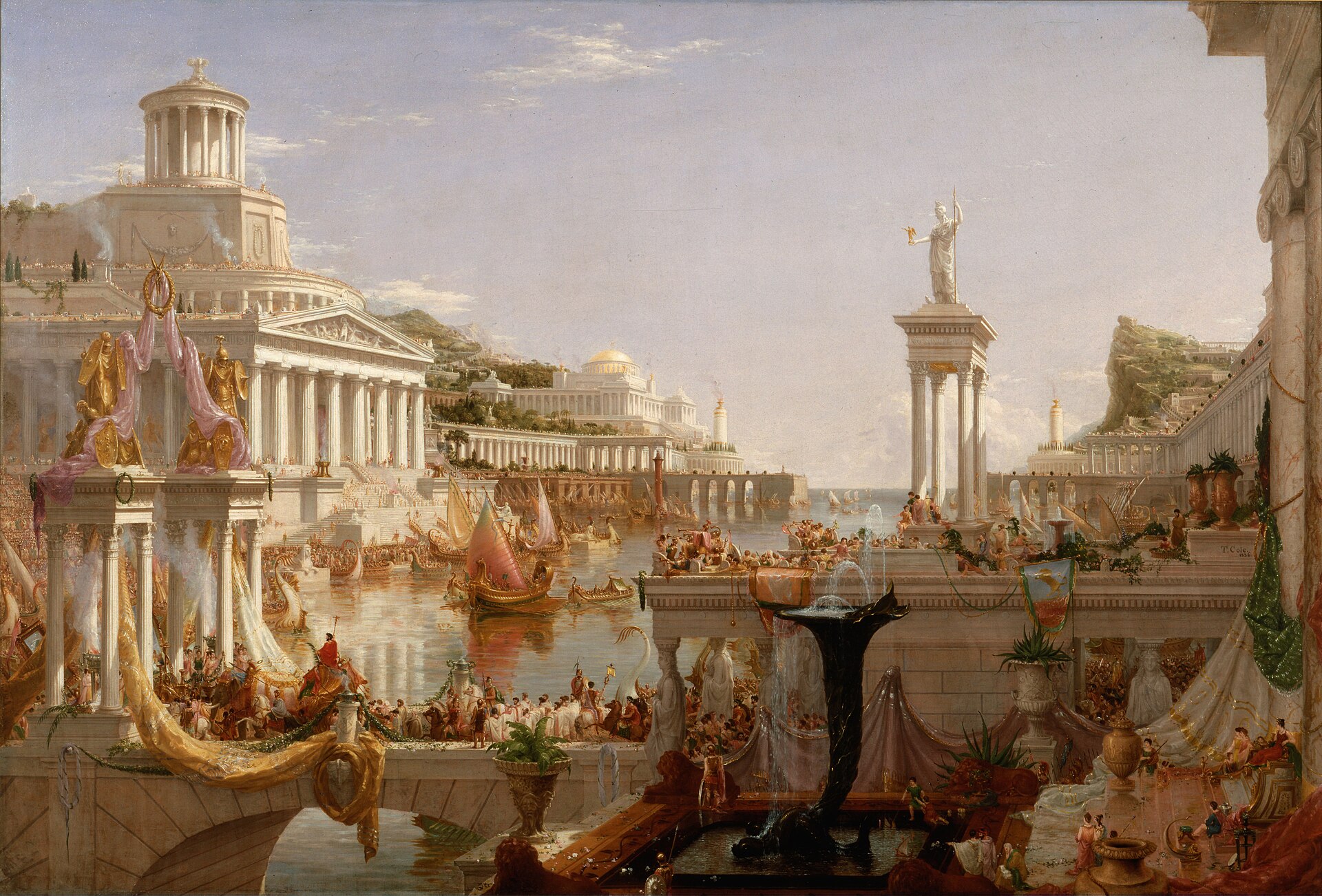 In 1992, after the dissolution of the Soviet Union, the political philosopher Francis Fukuyama wrote a highly influential book, The End of History and The Last Man. He claimed that “what we may be witnessing is not just the end of the Cold War, or the passing of a particular period of postwar history, but the end of history as such: that is, the end point of mankind’s ideological evolution and the universalization of Western liberal democracy as the final form of human government.” At that time, it seemed valid that liberal democracy was a victorious and sustainable form of government in the long-term. Fukuyama did not claim that events would stop occurring in the future, but no matter what happened, liberal democrary would be the prevalent system, even if totalitarianism reappeared.
The ‘End of History’ concept was not his original idea, though; it was based on the ideologies of G.W.F. Hegel and Karl Marx, who thought that human history can be regarded as a linear progression, from one socioeconomic period to another, towards increasingly advanced levels. While Marx believed that history progresses purposefully through material forces and class conflict, culminating in a communist society that would resolve all contradictions, his predecessor, Hegel suggested that human history is a gradual evolution of awareness, where each level of consciousness produces a matching type of society – moving from tribal communities to slave systems, then religious states, and eventually modern democratic and egalitarian societies. Hegel believed that history culminates in an absolute moment – a moment in which a final, rational form of society and state becomes victorious. So while Hegel saw history as the unfolding of human freedom, Marx proposed that history progresses through class struggle toward communism.
However, there were critics of their concept of history steadily advancing toward improvement or a final goal. Criticisms have come from philosophical, historical, religious and postmodern perspectives. For example, Friedrich Nietzsche rejected the idea that history moves toward moral or rational perfection. He argued that belief in progress is a secularized version of the Christian idea of salvation. Instead of this, he proposed the idea of eternal recurrence (a cyclical concept of time) and saw modern faith in progress as naive. Michel Foucault also rejected the grand narratives of historical progress. He argued that changes in history reflect shifts in power structures. The linear history concept was also challenged by Oswald Spengler and Arnold J. Toynbee, who argued that civilizations are organic and cyclical, and that history reveals a pattern of rise and fall of civilizations.
Fukuyama’s concept was also swiftly challenged, as he did not take into account religious movements and other aspects, such as ethnic behaviour. One of his key critics was Samuel P. Huntington. He wrote an essay one year after Fukuyama’s work, which soon became a whole book, The Clash of Civilizations and the Remaking of World Order. He said that after the Cold War, cultural and civilizational identities – not ideology or economics – would be the primary source of global conflicts. During the Cold War, the conflicts were ideological (capitalism vs. communism), but after the Cold War, the conflicts shifted to civilizational fault lines. He argues that wars will occur mainly between groups from different civilizations (like Western societies and Islamic societies). He believed that there will be a multipolar world, which is charaterized by civilizational blocs, increased cultural consciousness and the decline of Western dominance. His arguments were also challenged, as it was claimed that they simplify cultures and ignore internal diversity within civilizations. Huntington’s critics also claimed that globalization increases cooperation, not just conflict.
Although after the September 11 terror attacks in 2001 in the United States many scholars declared that Fukuyama’s view had been disproven, he still believed that in the end he remained right, as what he meant by the ‘End of History’ was the evolution of human political systems towards a liberal-democratic Western-style system. He also noted that his original thesis “does not imply a world free from conflict, nor the disappearance of culture as a distinguishing characteristic of societies”. In 2008, Robert Kagan published a book The Return of History and the End of Dreams, which clearly and directly contradicted Fukuyama’s book and the post-Cold War belief in the inevitable global spread of liberal democracy. Instead of entering a peaceful liberal world order as predicted, history has returned in the form of renewed great-power rivalry and ideological competition. Kagan said “the end of history was an illusion”. Authoritarianism has not disappeared and rival political systems remain powerful and attractive. He gave as examples China and Russia, which promote alternatives to Western liberal democracy. Power politics – not universal harmony – continues to shape global affairs. According to Kagan, economic development does not automatically lead to democracy and globalization does not guarantee political liberalization. Authoritarian regimes can modernize without becoming democratic. The dream of a peaceful, unified liberal world order after the Cold War was overly optimistic.
Related posts:


Image References
Cole Thomas The Consummation The Course of the Empire 1836 - Public Domain - from Wikimedia Commons (commons.wikimedia.org/wiki/File:Cole_Thomas_The_Consummation_The_Course_of_the_Empire_1836.jpg)
)
Permissions required for the publishing of this article have been obtained
What do you think?