The Myth of Osiris
Article By S.Venuti
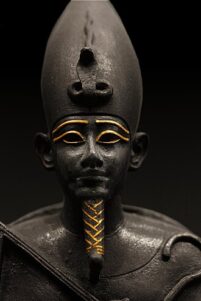 The Myth of Osiris occupies a central place in ancient Egyptian religion and theology, shaping concepts of kingship, afterlife, cosmic balance (Ma’at) and the cyclical renewal of life. Egyptian mythology did not present a unitary canonical text; rather, narrative strands emerged over millennia in Pyramid (funerary) Texts, Coffin Texts, temple reliefs and later classical accounts. At the core of this myth stands Osiris, originally a fertility and vegetation deity who became the paradigm of death and resurrection, the great judge of the dead in the Underworld or Afterlife (Duat), ensuring cosmic order and continuity beyond mortal existence. Most importantly, the Osiris myth is deeply connected with our human journey.
Nut is the goddess of the sky and vault of the heavens and is depicted as a woman arched over the earth god Geb, who is the physical support of the world and depicted as a man lying beneath her. Nut and Geb had the children Osiris, Set, Isis and Nepthys.
Osiris is a just and benevolent king, civilizing Egypt by teaching agriculture, religious rites, music, art and ethical governance. He embodies the proper ordering of life, death and regeneration. His rule is disrupted by the envy of his brother Set, a god associated with chaos, desert storms and destruction, who desires kingship. Set was so dangerous in fact, that his name was not spoken and it was often replaced by a protective amulet when it needed to be written. Set organizes a banquet where he presents a finely-crafted chest, promising to offer it to any guest who perfectly fits in it. The chest had been secretly made to the exact measurements of Osiris and fits no-one else; when Osiris lies in it, Set’s accomplices seal it closed and cast it into the Nile, ending Osiris’s earthly life. What does Osiris’s death represent? Killed by Set (differentiation), it signifies the withdrawal of order from creation, the intrusion of chaos (Isfet) which disrupts justice, order, balance, divine law and truth (Ma’at). We see in many mythologies that divine crime is the impetus for restoration.
According to one version of the myth, Osiris’s sister and wife, Isis, searches for his body restlessly in the form of a kite, finding it washed up on the shore of Byblos, Lebanon, where a tree had grown around it. Although the king of Byblos had used the trunk of the tree as support for his palace, Isis managed to have the chest with Osiris’s body returned. Isis represents the universal mother and wife, she is connected to initiation, life and knowledge of healing and in fact we see throughout history that it is the mothers and wives who keep the knowledge of traditions across generations. While hunting by night, Set finds the chest and, recognizing Osiris, cuts the body into 14 pieces and scatters them across Egypt. With the help of her sister Nephtys, Isis manages to recover the dismembered body except his phallus, which Set threw into the Nile and was eaten by a fish.
The Opet Temple in Karnak (which was called “Ipet-isut” and was the monumental cult centre for Amun-Ra) depicts a scene from the Late Period illustrating a transfer of seed between the ithyphallic Ba bird of Amun-Ra and the ithyphallic Osiris who is lying on the lion couch during the mummification process, signifying the mystical union of these divine forces. Lions in ancient Egyptian thought represent strength, ferocity, regeneration and were in fact often linked to cosmic battles, so Osiris on the lion couch reinforces his triumph over death and chaos through divine agency. The phallus, which was lost to the Nile, denoting that Osiris’s power to create went to the other world, becomes present in this important moment, symbolic of the return of life force after death. It is important to remember that ancient Egyptian gods and myths represent archetypes, ideals and transformative powers, and the myth of Osiris itself can be seen as an alchemical process. The transfer of seed resembles the circulation of divine vitality, where the regenerative forces of Amun-Ra’s Ba knit with the resurrected Osiris to reaffirm cosmic continuity. This cultic symbolism was probably used in rites of initiation and renewal, especially during festivals when deity statues were ritually united and revitalized on the temple grounds.
Anubis, the jackal-headed god of funerary practices and guide in the afterlife, mummifies Osiris with Isis and also Nephthys, Thoth and Horus involved in the restoration of his body and the funerary rituals. The mummification ritual brings things back into unity and this was done over 70 days. This astral-funerary connection is very significant, mirroring the 70 days around May when Sirius disappears from the night sky as it approaches the sun, remaining invisible for approximately 70 days. The ancient Egyptians interpreted this as a time of death or travel through the Duat. The mummification ritual embodied the 70 days of ‘purification’ or ‘death’ that the star underwent, before reappearing in the eastern sky just before sunrise (the heliacal rising) in August – thus the star and the soul reawakening to the light. And of course, this is another cycle in Nature.
Touching her shoulder, the Ba bird then seeded Isis (the Egyptian immaculate conception) who gave birth to Horus. Born on 25th December, Horus, the Sol Invictus and sky god depicted as a falcon, is the aspirant who follows in the footsteps of the initiate Osiris. Once mature, he went into battle with Set to reclaim the reign and restore balance in the kingdom. In this battle, Horus injures one of Set’s testicles, which removes his generative power, but Set injures Horus’s left eye. Horus’s eyes are celestial, the left often associated with the moon and its damage being associated with the waning and disappearance of the moon, while the right eye is solar. By injuring the left eye, Set impairs Horus’s generating spiritual power, impacting the cosmic balance, bringing disharmony. The eye was restored by Thoth, god of wisdom, writing and magic who brought some mediation between Horus and Set, or in later versions by Hathor, the mother goddess in her nurturing and healing aspect; and these gods respectively used their powers and filled the eye with plants and mineral or gazelle milk, likening this healing period with the waxing of the moon. This is another important aspect of the myth related to our human journey: we all have an injured eye, our spiritual eye, which through wisdom, love and unity we must learn to use again. The Wedjat, the Horus Eye, became a symbol of Horus’s constant presence and spiritual power, the parts of the Eye having mathematical significance and holding deep meaning which readers can further explore. In some traditions, Horus offered his restored eye to Osiris, another spiritual link in the cycle of their Kingdoms of the Living and the Dead.
Horus eventually wins the battle over Set and rises triumphant as the King of the Living, restoring divine order, harmony and Ma’at. We learn that this doesn’t mean he killed Set, but rather gains control and power over him. Set in fact isn’t at all destroyed but is eventually given a new position by the god Ra, which is to defend the divine barque for the crossing of the soul.
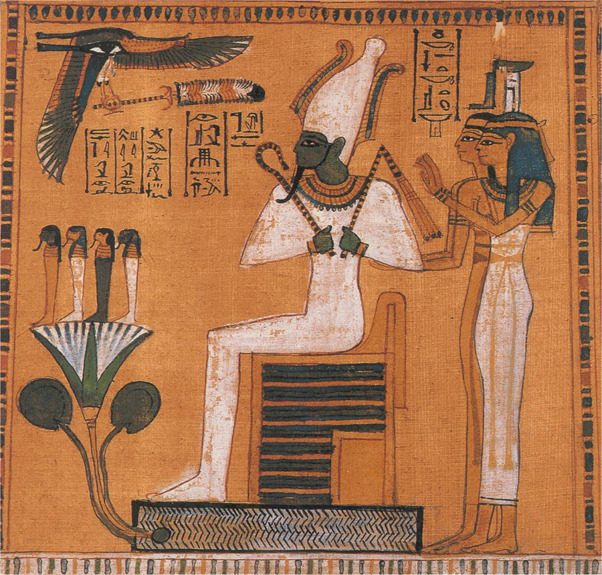
To conclude, we see that Osiris deeply represents duality, cyclicity, the continued journey of the soul beyond physical life, the necessity to harmonize the opposites; he is the first initiate as he is the one acquiring complete internal consciousness. Osiris becomes King of the Underworld, ruling beyond manifestation, wrapped in white linen cloth with his legs unified into one representing complete centredness to the spiritual axis, complete unity, holding the crook (heka) and flail (nekhakha) crossing over his chest symbolizing his harmonized powers of giving and receiving, guiding and keeping order. The colour of his skin is black or green, symbolic of fertility and regeneration. His crown combines the White Crown of Upper Egypt with two curly ostrich feathers, symbolic of truth and justice similarly to Maat, and is adorned with a small sun disk at the top and a uraeus serpent on the front, signifying his solar connection, divine authority and wisdom.
Osiris is the archetypical human being of Plato who is put to the test by Set, who is the power of bringing things into consciousness. Set in fact is not evil – he represents the dark side of life which is present in all our lives; he is destabilizing, he puts good to the test: when darkness comes, we must learn to control its power and channel it into a way we can use for our path. He destroys the transitory and uncovers the permanent, which is what our soul needs for its long journey. How can we control Set’s power? Isis is the clue, the unifying principle, love. Love in its pure and archetypal wholeness and enveloping wisdom is the magic that can transform and transmute. If we learn to use our own Isis, our love and search for wisdom, we can control Set.
Some Pictures with Links
Isis and Osiris Legend & Myth – Phoenicians in Phoenicia
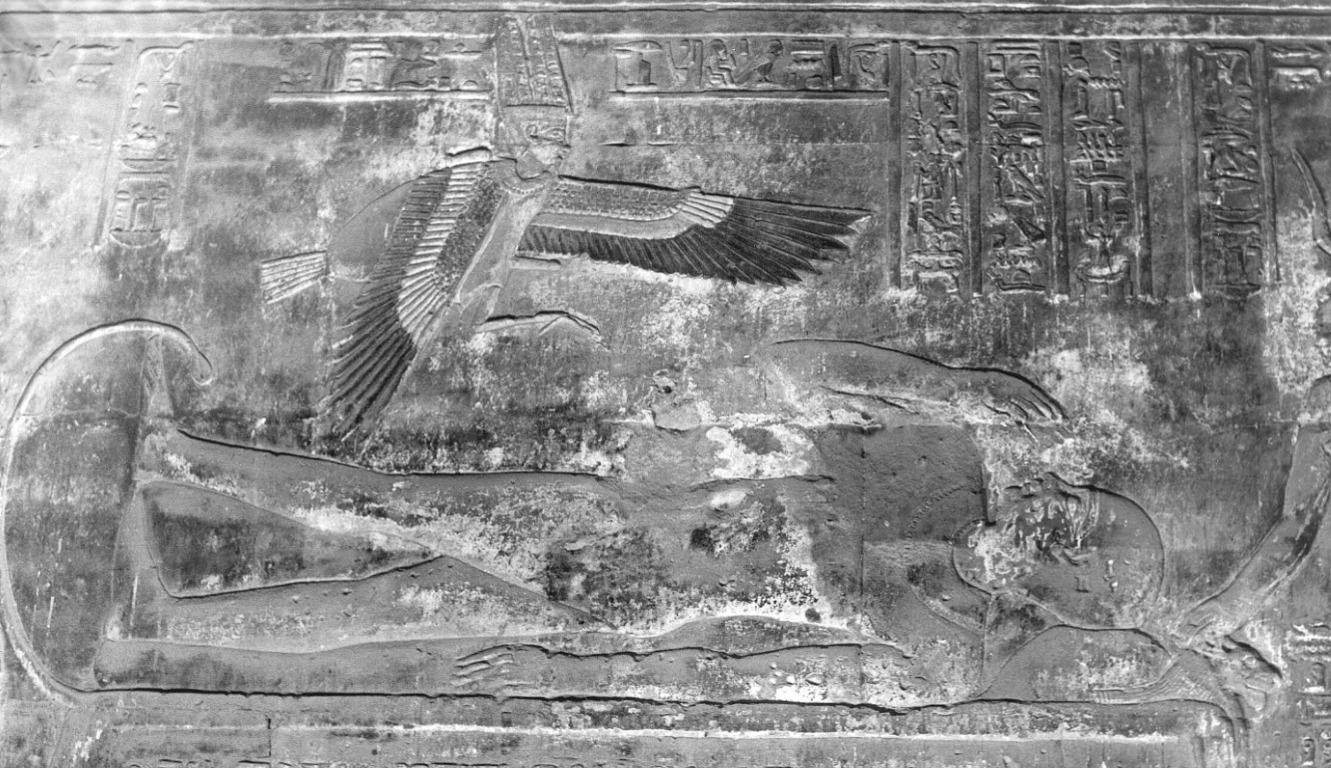
Discover the Eye of Horus of Protection, Healing & Power
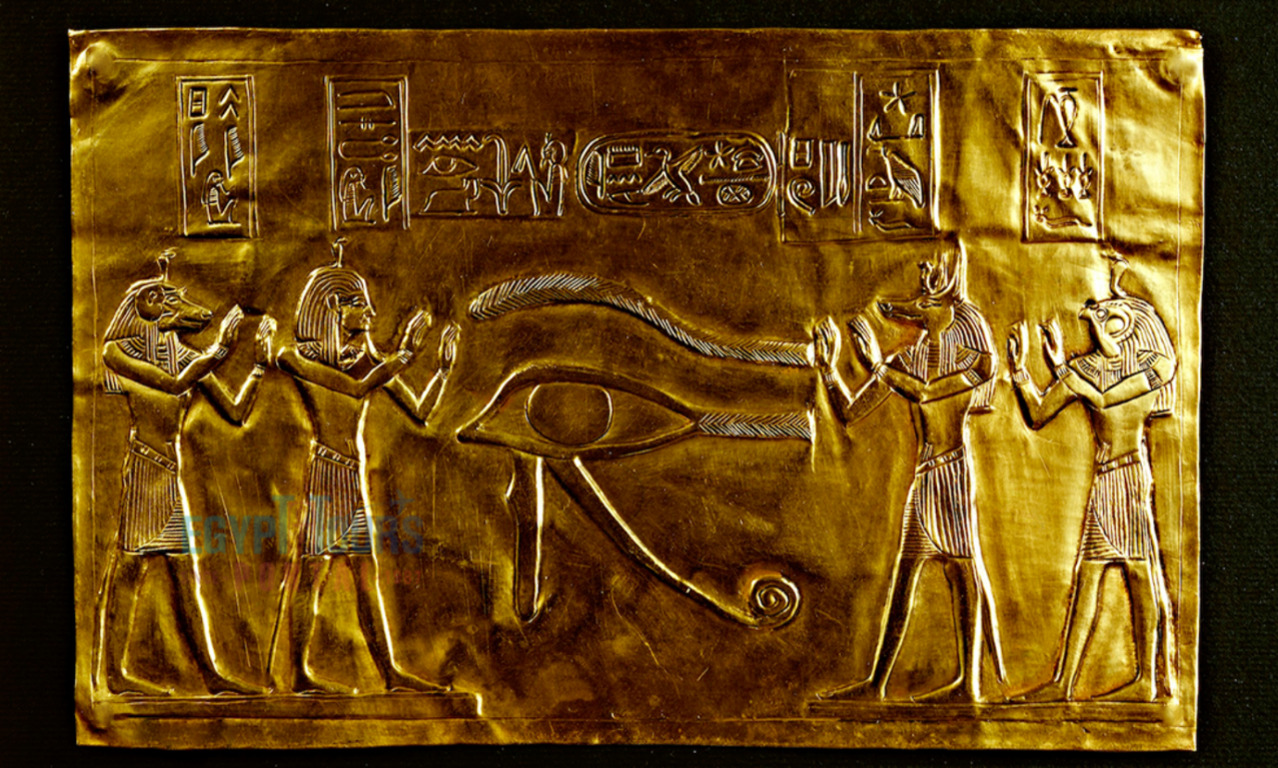
Image Credits: By Rama | Wikimedia Commons | CC BY-SA 3.0 FR
Related posts:
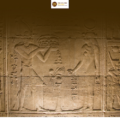
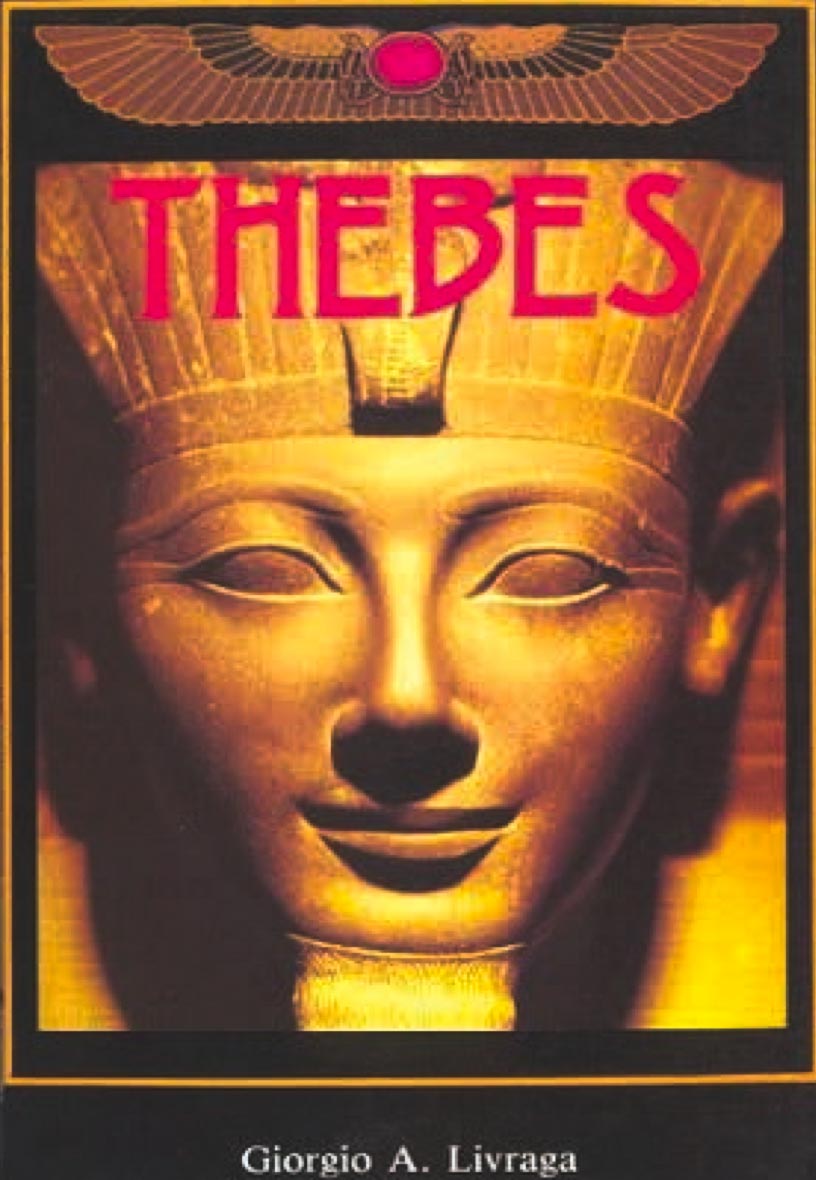
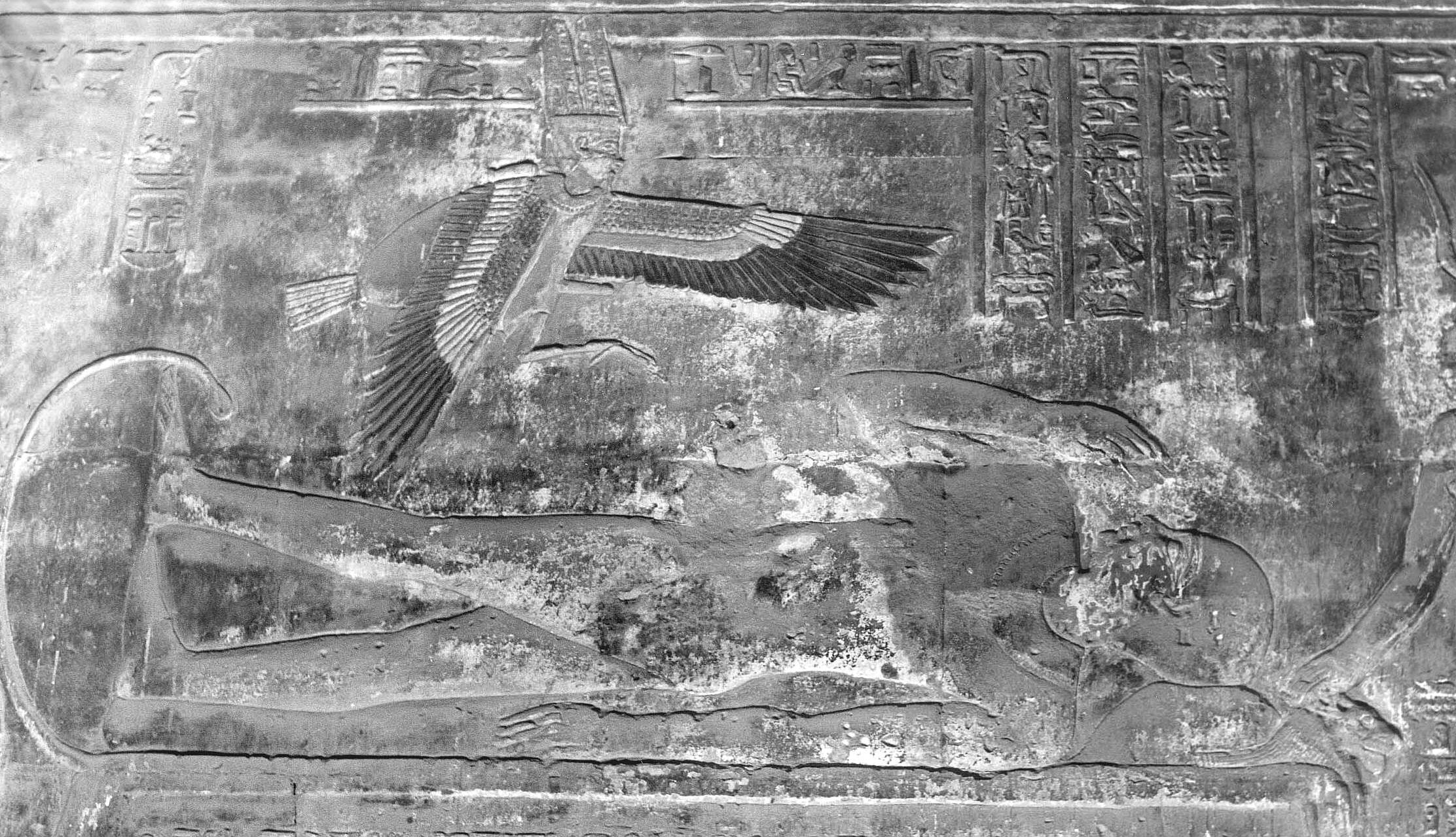
Image References
Featured Image : By Rama | Wikimedia Commons | CC BY-SA 3.0 FR
Permissions required for the publishing of this article have been obtained
Article References
Bibliography: Greg. 25/02/2026. A Scene from the Opet Temple – www.egyptology/extreme/
Livraga, J.A. Thebes. New Acropolis Publishers, 1989
Raven, M.J. Egyptian Magic. The Quest for Thoth’s Book of Secrets. The American University in Cairo Press. 2019
Thayer, B. 01/03/2026. Plutarch: Isis and Osiris. LacusCurtiushttps://www.penelope.uchicago.edu/Thayer/E/Roman/Texts/Plutarch/Moralia/Isis_and_Osiris*/home.html">www.penelope.uchicago.edu/Thayer/E/Roman/Texts/Plutarch/Moralia/Isis_and_Osiris*/home.html">https://www.penelope.uchicago.edu/Thayer/E/Roman/Texts/Plutarch/Moralia/Isis_and_Osiris*/home.html
Venuti, S. Notes taken during New Acropolis UK tour of Egypt with Dr. Hannes Weinelt. Feb 2026.
What do you think?