Esoteric Aspects of the Italic Tradition
Article By Agostino Dominici
Esoterica
The Italic (Latin‑Greek) Tradition is animated by an esoteric current, which like a hidden subterranean river, runs beneath Roman religion, philosophy, poetry, and politics. Its mythological roots can be said to predate the founding of Rome itself (753 BCE). In its tangible form, traces of it can be found from the late Republic through late antiquity and beyond. While it draws on Greece and the Etruscans and shares much with Greek Platonism and the Mediterranean mystery cults, it transforms these influences into a distinctive vision of Rome’s destiny, the heroic spirit, the soul’s transformation, and the anticipated return of the Golden Age and the Age of Heroes[1]. A return marked by the constant themes of regeneration, rebirth, renaissance and resurgence.
The various stages of this Italic path are illuminated by a remarkable array of figures, including Cicero, Plutarch, Nigidius Figulus, the emperors Augustus and Julian[2], as well as Virgil, Ovid, and Macrobius. This tradition continues through the Middle Ages with Petrarch, Dante and the Fedeli d’Amore[3], it extends into the Florentine Renaissance to culminate in the esoteric currents behind the Italian Risorgimento.
Aeneas, the Golden Bough, and the Western Light
We can situate the imaginative centre of this tradition in Virgil’s Aeneid, especially Book VI, where Aeneas descends into the underworld guided by the Sibyl. Before he can enter, he must find and pluck the Golden Bough[4], a mysterious talisman that yields only to the hero chosen by fate. Later tradition understood this bough as a symbol of divine favour, safe crossing between worlds, and the soul’s capacity to pass through death and survive it. In Virgil’s poem, the Golden Bough allows Aeneas to pass among the dead, encounter his father Anchises, and behold the future heroes of Rome yet to be born. The bough thus symbolizes the power of transition − between death and rebirth, mortality and eternity, suffering and destiny. Viewed esoterically, this journey provides a description of the initiatory path: the hero must accept the burden of fate, descend into the ‘night’ of the soul, and then return, carrying the light of wisdom back to his people.
Closely linked to this story, is the image of Hesperia, the western land (where the golden apples grow) that Aeneas seeks[5], and the light of Venus as evening star. The West – vespers, Hesperia – is not merely geographical; it is the symbolic threshold where the sun seems to die to be reborn again completely purified[6]. The West has always been intrinsically tied to twilight, the closing of a cycle, and the gathering of internal light as the external light fades away. In this liminal zone, the Italic imagination locates the promise of regeneration: the passing of an old age and the dawning of a renewed Golden Age. Ovid and later Latin writers recall earlier ages of abundance, justice and closeness to the gods[7], suggesting that these golden times, like the Spring, can return − but only through both inner and outer transformation.
Venus, Aeneas’s mother, also incorporates other important symbols closely connected to this Tradition : Amor(Love, as the sublimated force of Eros which binds every living being together), Flora (the abundance of springtime), Victoria (victory) and Genetrix (generative, life-giving force).
The Roman Path of the Soul
Unlike the more familiar mystery cults and philosophical speculations of the Greeks, the Italic tradition often took shape within a world of laws, armies and politics. Yet, at its core, it remained concerned with the human soul: its origin, tribulations and ultimate apotheosis − its elevation toward the divine[8].
Cicero, Plutarch, and later Emperor Julian all described the cosmos as a living, ordered system, through which the soul travels, ascending and descending between mortal life and the stars. In Cicero’s Dream of Scipio and Macrobius’s Commentary, the soul is shown descending through the planetary spheres, while the elder Scipio tells his descendants that below the orbit of the Moon, “…there is nothing but what is mortal and transitory…” In these authors, the question ‘how should I live?’ is tied directly to the cosmos itself and reframed as: ‘In which direction should my life move?’ The choice is either downward into heavy, material distractions, or upward toward a clearer, more luminous way of being. The Italic tradition uses therefore this layered cosmic system to envision a disciplined, heroic journey of purification, ascent and eventual return to a divine source.
By reviving Neo-Pythagoreanism, Nigidius Figulus championed the idea that the soul is an exiled divine spark that must seek purification, using astrology as the map to navigate its ascent back to the stars. Later, emperors like Augustus and Julian restored rites and mysteries that dramatized these ideas in public religion[9].
Finally, Cicero famously wrote that “we are not born for ourselves alone, but for our country and our friends.” Showing how the Italic tradition extends this civic ethic directly into the cosmos: the soul’s progress is bound up with service to a higher order, both political and divine. To rise among the stars is not mere escape; it is the crowning of a life lived with pietas, duty toward the gods, courage and justice.
Pythagorean Echoes: Golden Tablets and Anamnesis
The Italic tradition did not arise in isolation. Southern Italy, known as Magna Graecia, had long been home to Pythagorean communities and Orphic cults whose famous ‘golden tablets’ served as ‘instructions’ to the soul in the afterlife. These tablets speak of remembering one’s divine origin, avoiding the waters of forgetfulness and choosing the right path among the dead.
These concepts tie directly into the doctrine of anamnesis, the soul’s recollection of its true, divine nature. Channeling these earlier traditions, Plutarch describes souls that undergo punishment and purification before returning to the world transformed, aligning closely with the Italic emphasis on rebirth and reformation. In this tradition, remembering who one truly is involves recalling not only one’s divine essence but also one’s duties, ancestral lineage and place within the cosmic order.
Magia and Imaginatio
Within this Italic world‑view, magia (magic) and imaginatio (imagination) are central tools. Magia, understood as ‘the art of the Magi’ can be seen as the art of rendering invisible principles visible, that is, bringing hidden causes or forms to manifestation. But magia needs, imaginatio which is the soul’s form‑giving power (vis formatrix).
Imaginatio as a mental faculty, when properly purified and trained, becomes capable of receiving, ‘capturing’ and shaping images that participate in higher, even divine, realities. While Magia, the applied will or intent operating through such images, seeks to render them effective or manifest within the material realms[10].
In the Italic tradition, magia and imaginatio were paired because they never separated ‘inner vision’ from ‘outer action’. They also understood that a truly effective magical rite required both correct form, focused intention and a rightly directed imagination. In short, Virgil’s underworld, Apuleius’s initiatory trials, and Cicero’s cosmic dream all functioned as active exercises of imaginatio, providing the imaginative scaffolding for the reader’s own spiritual awakening and catalyzing a radical reorientation of self and society.
Death and Rebirth: From Aeneas to Dante
Centuries after Virgil, Dante Alighieri would cast his Divine Comedy as a journey through three realms of consciousness, Inferno, Purgatory, and Paradise, guided first by Virgil himself. Echoing earlier teachings, Dante’s poem speaks of a confrontation with one’s own shadows, followed by a long path of purification and a final ascent through the celestial spheres, culminating in union with the divine. The triadic structure of his masterwork underscores the esoteric and initiatic path found across the Italic tradition.
In Dante’s Comedy, the three realms should be read as an inner alchemical process: Nigredo/Inferno: the blackening stage, a descent into one’s inner ‘cave’ or shadow, where the soul confronts its own distortions; Albedo/Purgatory: the whitening stage of purification and sublimation of desires and intentions; Rubedo/Paradise: the reddening stage, a fully awakened love and direct participation in the divine light.
Along this path, Dante dramatizes two more crucial Italic themes. As presented in his La Vita Nuova (The New Life), we find metanoia, an inner turning, a radical shift of orientation away from egoic drives toward higher truth. A second theme is that of katabasis, the courageous facing of darkness, both personal and collective. Only by going ‘through the middle of the earth’, as Dante does, can the soul emerge on the other side, ready for ascent[11].
Ignis and the ‘Warrior Spirit’
The Italic path, unfolding under the symbol of Mars – the complementary counterpart to Venus-Amor, takes on a distinctly ‘warrior-like’ character. Not a path of brute violence, but one of inner courage. The sustaining quality along this path is Vir − heroic virtue, courage rooted not in aggression but in steadfastness and fidelity to the Good and the Just (see Plato). Cicero praises virtus as the highest quality of the statesman, while Emperor Julian, alluding to Hercules’s Twelve Labours, speaks of the fiery Sun as a divine king whom the soul must emulate[12]. The warrior’s journey is to pass through fear, loss, and adversity while maintaining in the mind the steady image of a higher order of reality. In this sense, Aeneas, the philosophical statesman, the initiated emperor and Dante’s spiritual pilgrim all walk variations of the same road.
Fire (ignis) plays a central role in this martial journey of inner transformation. In both ancient mysteries and Dante’s poem, fire burns away what is unworthy while strengthening what is noble. This is not merely a physical flame but a sacred, alchemical fire: a sublimated Eros or Amor that, when rightly directed, becomes a force of purification and transmutation rather than destruction. Dante himself famously declares that “the love that moves the sun and the other stars” is the deepest power of the universe, echoing both Platonic and Italic intuitions.
Towards a New Golden Age
As mentioned at the beginning, a single, persistent theme runs through the various themes discussed: regeneration. The Italic tradition longs for the renewal of both soul and society − a restoration of the lost Golden Age, or Age of Heroes. This hope reappears at different moments in the history of the peoples of the Italic peninsula, and the western light of Venus at evening − Hesperia − serves as its emblem. It shines when the sun has set, when the world of appearances loosens its hold on waking consciousness, and the sky begins to unveil its majestic expanses: a field of stars, symbols of the unchanging archetypes, revealing ages yet to be born and the promise of a New Age.
Image Credits: By Rijin | Wikimedia Commons | CC BY-SA 4.0
Related posts:
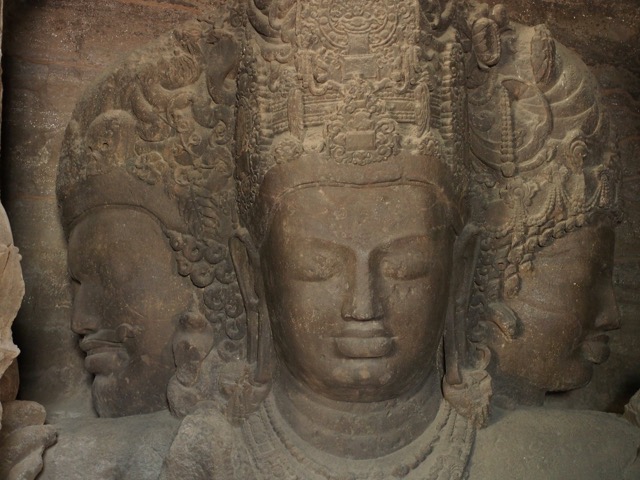
Image References
By Rijin | Wikimedia Commons | CC BY-SA 4.0
Permissions required for the publishing of this article have been obtained
Article References
[1] The word Hero is etymologically connected to Eros/Amor. “Amor is the root principle and force in action, underlying the hero whether acting in the inner or outer planes. By embodying the principle of amor, the hero is set apart from the hubris of the Titans and usurpers of Tradition”. Quoted in The Magic Door by David Pantano.
[2] Even though emperors might seem out of place in a discussion of esoteric topics, I have my reasons for including them on this list. Emperor Flavius Claudius Iulianus was initiated into various ancient mystery cults, while Emperor Augustus reformed and revived many Roman cults, rites, and festivals, claiming to have rebuilt eighty temples. In this respect, see also note 9.
[3] The Fedeli d’Amore (‘Faithful of Love’) were outwardly a literary and courtly movement but in reality were initiatory circles, who saw ‘love’ as a vehicle for the soul’s ascent and transformation (see for instance Plato’s Symposium). In a symbolic key, they are the Aeneans, the followers of Venus/Amor.
[4] According to the anthropologist Sir James Frazer, the Golden Bough functioned symbolically as an initiatory token: a sign of the right to enter the otherworld. Linking it thus to archaic initiation rituals.
[5] In Roman mythology, Aeneas is regarded as the legendary progenitor of the Roman people. In his journey, he seeks not only a physical homeland situated in the West − the Italian peninsula − but also his spiritual origin, uniting earthly and transcendent destinies. [6] In many Egyptian funerary/initiatory texts we find the same type of ‘astronomical’ symbolism, centred in the journey of the Sun-Ra moving across the sky and beyond into the Netherworld.
[7] This refers to a bygone Golden Age in archaic ‘Italy’, known as Saturnia Tellus and ruled by Saturn. In another legend, Saturn found refuge in Latium (the Lazio region), thus planting a symbolic ‘golden seed’ in the ‘Italian’ soil.
[8] In ancient Rome, heroes and other exceptional human beings were believed, after death, to ascend to the heavens and acquire divine status. This idea appears at the very foundation of Roman tradition, with its founder Romulus ascending to heaven and becoming the god Quirinus.
[9] A recent study by Aurelio Bruno, Il Pantheon del Cielo: Culture e Riti per l'Ascesa Stellare nel Pantheon “Platonico” di Roma(The Pantheon of the Sky: Cultures and Rites for Stellar Ascent in the “Platonic” Pantheon of Rome), argues that the Roman Pantheon was conceived not merely as an architectural marvel, but as a ritual ‘machine’ for the stellar ascent of the soul and of the emperor. By connecting literary and philosophical sources with archaeological and artistic evidence, the study presents the Pantheon as a three-dimensional image of the cosmos and of the soul’s celestial journey. In it, rituals of purification, circumambulation and vocal invocations were performed in order to bring about the emperor’s transformation into an undying, star‑like divine being.
[10] See also the article The Mundus Imaginalis, New Acropolis Magazine Issue 62 (May-June 2024)
[11] This stage is epitomised in the alchemical motto V.I.T.R.I.O.L. (“Visit the interior of the earth; by rectifying, you will find the hidden stone.”)
[12] In the alchemical tradition, these Twelve Labours are not just symbolic; they belong to a series of transformative operations, related to internal processes of purification, dissolution, and fixation. In the alchemical writings this process is called Ignis Rotae, the ‘wheel fire’.
What do you think?