The Comacine Masters
Article By Agostino Dominici
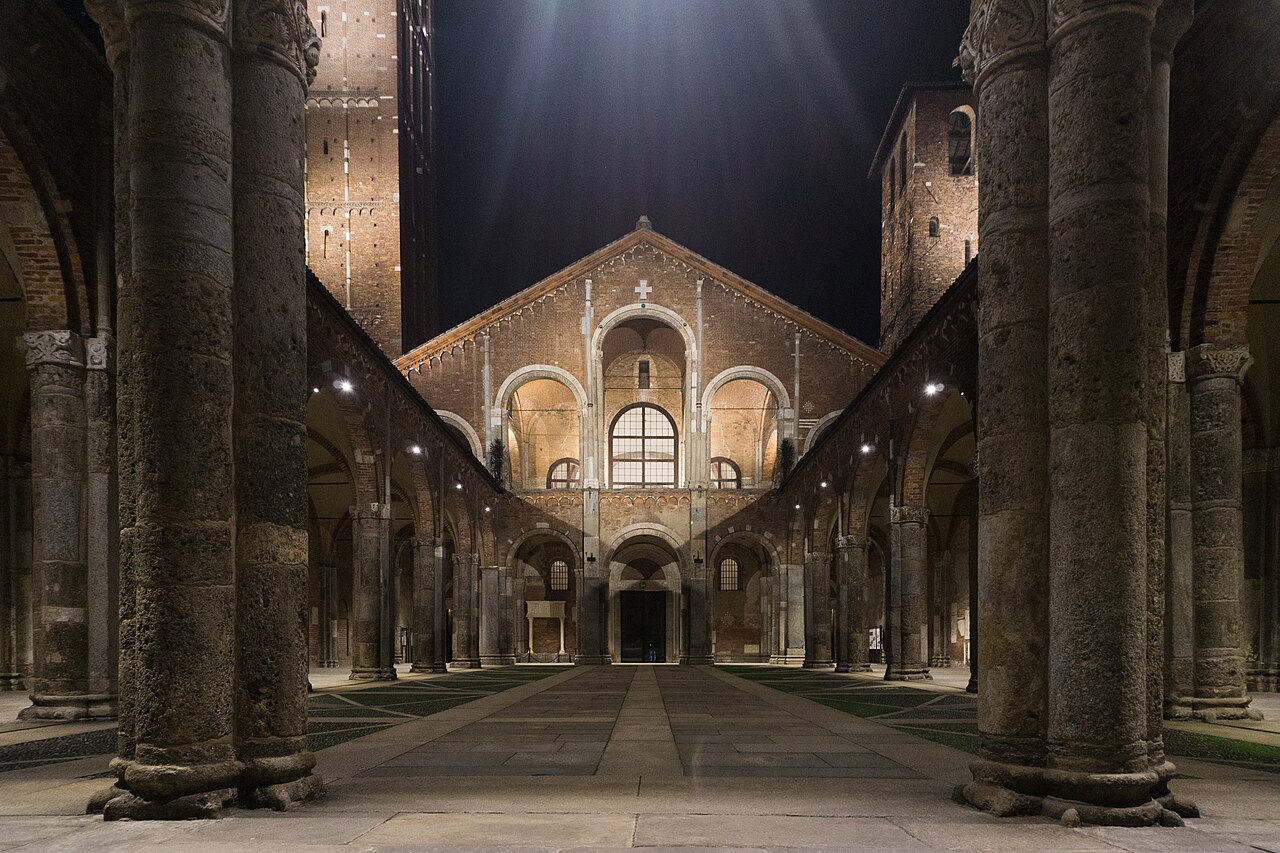 I have always been fascinated by the tradition of sacred masonry, which throughout the ages has left us many remarkable and inspiring buildings. I am thinking especially of those medieval builders who assumed the role of architect-priests, carrying on an ancient tradition that goes back to Imhotep himself (circa 2700 BCE) – the famous priest, vizier and architect of ancient Heliopolis. Our age – full of plastic, artificial building materials, high-tech machines and utilitarian architecture – has almost completely lost touch with the symbolic and practical art of “working the stone”, thus forgetting the importance it once held across the esoteric, spiritual and mystical traditions of the past. The Comacini masters form part of this ancient legacy in which ‘working the stone’ was part of an architectural language that went beyond the mere engineering aspects, encompassing metaphysical ideas of universal creation and inner transformation. Before delving into the cultural side of the Comacine stone masons, let’s say a few words about their predecessors, the Roman collegia.
The Roman collegia were multifaceted associations – guilds, religious fraternities, burial societies, and professional craft organizations – that strongly shaped Roman society. Many were dedicated to the worship of specific deities or were linked to mystery cults. Collegia often adopted symbolic emblems (loaf of bread for bakers, forge tools for smiths, square and compass for masons) to be used as teaching tools for ethical and spiritual truths. The collegia were not only economic engines but through their internal regulations and ceremonies acted as custodians and transmitters of symbolic, mythic and initiatory knowledge. It is especially among the colleges of architects and builders that a certain type of ‘secret’ and ‘coded’ language reached the Comacine Masters who are widely regarded as descendants or successors of the Roman collegia.
Now let’s delve into our main topic. The Maestri Comacini (Comacine Masters) were an influential group of itinerant guilds of masons, architects and decorators originating from the Como region in Lombardy, Italy. From around the 6th century (until the 11th c.), they played a crucial role in early medieval building and architectural innovation. Their architectural legacy includes not only structures but also the preservation of ancient construction methods and artistic canons that shaped medieval and Romanesque architecture across Europe.
The Comacine Masters are credited with pioneering a distinctive Romanesque architectural style (known as the “Como-Pavian” school) blending Roman, Lombard, Byzantine, Coptic and other artistic traditions. Many elements of their style – geometric interlaces, intricate stone carvings and ornamental patterning – show influences from Islamic architecture as well. Their role was pivotal in the transition and development of Gothic cathedral architecture throughout medieval Europe. In fact, one of their architectural innovations – that initiated the evolution from Romanesque to Gothic styles – was the use of pointed arches and steeply pitched roofs. Later on, these features became hallmarks of Gothic architecture.
The Comacine Masters spread their influence from Italy to Northern Europe primarily through their status as an itinerant guild of master builders who travelled widely across the continent. The guild operated with a degree of independence granted by Lombard rulers, allowing members freedom to travel. They were often given building commissions by influential church leaders and rulers (e.g. Pope Gregory the Great, Gregory II and Charlemagne) and their guild operated across borders, including countries like France, Spain, Germany and England.
The Comacini’s guild structure, secretive practices and symbolic use of tools have been connected historically to early or proto-Masonic guilds, partly inspiring the development of modern Freemasonry. The hierarchical structure of the Comacine Masters’ guild consisted of three main internal degrees or classes:
– Novices (Apprentices): these were the beginners or trainees who underwent initial instruction and practical training in the arts of construction, masonry, sculpture and related crafts. They were trained in a dedicated school often called the “schola”.
– Operatori (Craftsmen/Workers): after apprenticeship, members progressed to this class where they actively worked on stone hewing, carving and the physical, material aspect of building. Their workshop was sometimes called the “laborarium,” the centre for practical craftsmanship but not yet fully qualified for leadership.
– Magistri (Masters): this was the highest degree, comprised of fully qualified master builders who had the authority to take contracts, lead building works and supervise others. They were considered the elite within the guild and had full legal and organizational rights.
The Comacini guild was a secret brotherhood, preserving the knowledge of stone building and related arts, while also offering mutual support and fraternal bonds.
Each local lodge was led by a Gran Maestro (Grand Master) or Capo Maestro (Head Master), and supported by officers such as a treasurer and secretary.
Members wore aprons, a sign still used in many craft and Masonic traditions. The guild used secret signs and marks to recognize members across different sites and projects, which also served as a signature on their work. It is believed that they used the Solomon’s Knot as their emblem – a symbol rich in esoteric and philosophical significance.
Some of their architectural symbols evolved considerably from their Roman origins through to the Renaissance, while others remained unchanged for centuries. In their architectural sculpture, they preserved and adapted Roman classical elements such as Ionic and a variant of Corinthian capitals with upright volutes, creating a stylistic continuity from Roman imperial architecture to medieval buildings.
Among other symbols we can mention:
– The mosaic pavement motif, representing the foundation and order of construction work, reflecting Roman floor mosaic traditions.
– The Lion of Judah (or the lion’s paw), which functioned as a signature motif marking their work, often seen crouching or guardian-like, representing power and protection. These lions appear in Lombard churches and during the early medieval and Gothic periods.
– The Two Great Pillars “J” and “B”: this is a symbol linked to legendary pillars framing the entrance to Solomon’s Temple, representing wisdom and strength, used often internally as secret signs.
As mentioned earlier, their guild’s symbolic language also included tools such as the square, compass, mallet and rulers – each imbued with allegorical meanings related to moral and spiritual virtues, signifying also technical secrets and their spiritual mission.
By the late medieval period and into the Renaissance (circa 15th-16th centuries), the Comacine Masters’ symbols and guild practices began to coalesce or merge with other masons’ guilds, until the traditional Comacine organization eventually faded or transformed into the freemasonry movements of later centuries.
Related posts:
Image References
Wikimedia Commons Under the License - en.wikipedia.org/wiki/Creative_Commons
Permissions required for the publishing of this article have been obtained
What do you think?