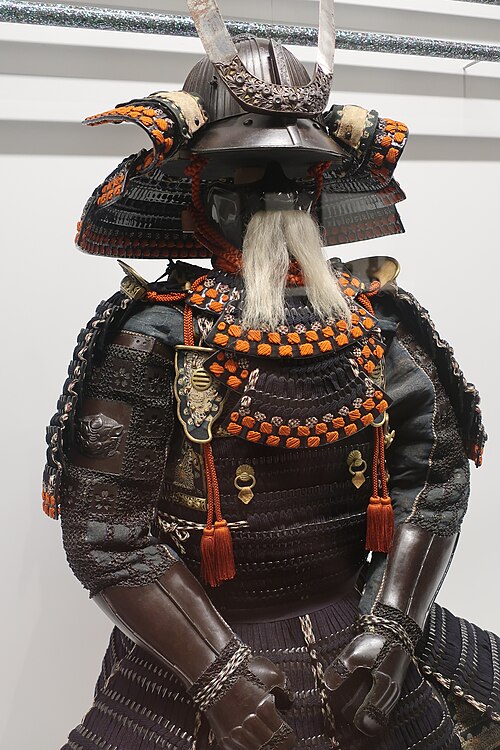
The Samurai and the Spirit of Bushido
 I was inspired to write this article after visiting an exhibition on the samurai at the British Museum. Paradoxically for an exhibition about warriors, and much to my surprise, I emerged with a strong feeling of joyful peace and serenity, effects which I attribute to the sheer beauty of some of the paintings and artefacts on display, along with the often heroic stories that accompanied them, because real heroism (as opposed to bravado) is a form of beauty finer than any painting.
I mention my surprise because in one of the main rooms of the exhibition a video was playing with a soundtrack of soldiers shouting, along with images of others being pierced with lances or decapitated with the legendary Japanese swords.
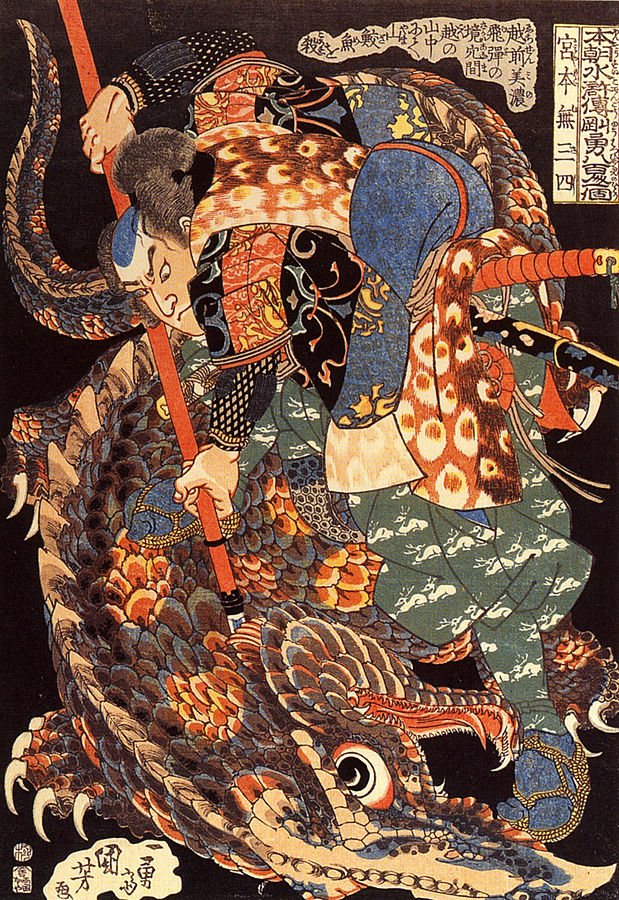
As I stood in rapt contemplation of a scroll painting of two birds on a flowering branch, I found myself thinking how it was that these people who dedicated themselves to warfare could at the same time have such a capacity for producing and appreciating beautiful art.
One explanation could be that most of the art on display was produced during the Edo or Tokugawa era (1603-1867), which included a 250-year period of almost uninterrupted peace, broken only by occasional rebellions and skirmishes. Quite an impressive achievement in terms of world history.
But the history of the samurai goes back to earlier ages when warfare was a daily reality, from the late 9thcentury according to some or the 12th century according to others. And even during the Edo period, when the samurai came to form part of a highly organized administration, they continued to identify as warriors and were trained in battle skills and a warrior mentality.
So I think that a more comprehensive explanation of the way in which war and aesthetics were able to be harmoniously combined in the samurai mind is to be found in the warrior code known as Bushido (Bu-shi-do = military-knight-ways) and in the religious and philosophical background of Zen Buddhism and Confucianism.
One example of this contrast was a beautiful grey-blue armour surcoat displayed at the exhibition, which depicts a legendary scene from Japanese history: the hero, Minamoto no Yoshi-ie (1039-1106), is shown on his horse, pausing to write a poem on his way back from a battle, inspired by the poignant sight of flowering cherry blossom.
This reminded me of a famous quote by Lenin, who said that he had to stop listening to Beethoven’s Appassionata Sonata because it filled him with tender feelings, which were incompatible with the revolutionary necessity of “beating people’s little heads”. In a similar vein, I read in a document about the First World War an anecdote about a soldier on leave who went to a concert of classical music but decided never to go again because the tender feelings it evoked were so incompatible with the fighting he had to do in the trenches.
So how and why were the Japanese samurai so different? How did they reconcile these apparent opposites – the tenderness evoked by beauty and the need to fight?
One way of answering this is by reference to Zen Buddhism, the favoured religion of the samurai. To attempt to describe what Zen Buddhism is would be presumptuous on my part, but I can say very briefly that it tries to penetrate the essence of Life as it is. This is why the ‘koan’ or paradoxical anecdote is at the heart of Zen teaching. Life is inherently paradoxical and in order to penetrate its essence one must learn to transcend the apparent opposites and integrate them into an undivided whole. The samurai who follows the Zen way is therefore not perturbed by the apparent dichotomy of warfare and poetry. He (or she, for there were women samurai as well) sees only Life as it is in the moment. In battle he is the fiercest of warriors; contemplating the cherry blossom or the bird on the branch, he is the tenderest of poets, the most sensitive of artists.
Today, many people speak of compassion as the highest of virtues. Is it conceivable that the samurai warriors had compassion? According to Inazo Nitobe, author of the classic work Bushido, the Soul of Japan,[1] there is a specific term for this in Japanese: ‘Bushi no nasaké’ – meaning the tenderness of a warrior. Alongside Zen Buddhism, the teachings of Confucius, and particularly those of his follower Mencius, were at the heart of Bushido. Confucius and Mencius spoke of “benevolence” as a core virtue. Mencius wrote that “the feeling of distress is the root of benevolence”; therefore, says Nitobe, “a benevolent man is ever mindful of those who are suffering and in distress.”
In this way, the best of the samurai, the true followers of the Bushido code, were tender-hearted, yet at the same time capable of decisive military action. The cultivation of tender feelings through the arts, “breeds considerate regard for the suffering of others” (Nitobe).
Another thought that occurred to me as I wandered through the exhibition was how the samurai learned to face pain and death with apparent equanimity. Part of it was down to their education and upbringing. Rather like the Spartans of ancient Greece, children were taught by their mothers to endure hardship without complaint. They would be made to walk barefoot through the snow to their teacher’s house. If they cried at falling down and grazing their knee, their mother might say, “What are you crying about? What would you do if your arm was cut off in a battle?”
The Japanese are well known for the suppression of emotion, but we have already seen that they were experts in the expression of the tenderest and most refined feelings, especially through the arts. And the aim of such cultivation was the development of benevolence towards those who suffer. As an old samurai maxim goes: “It becometh not the fowler to slay the bird which takes refuge in his bosom.”
Another aid to their bravery in the face of death and pain was surely their Buddhist beliefs, for as Buddha says in the Dhammapada, the body is like a bubble of froth, the foam of a wave, a painted chariot. Why, then, be attached to it? Not that they would rashly throw away their lives, for that is not true courage. But for them, more important than mere physical existence was a life lived with dignity and honour – “metaphysical goods”, as the philosopher and anthropologist Fernand Schwarz has called them. This is why the cherry blossom is an iconic symbol in Japan, because it flowers briefly and beautifully, and then is gone – an apt symbol for the beauty and transience of existence, and the need to appreciate each moment.
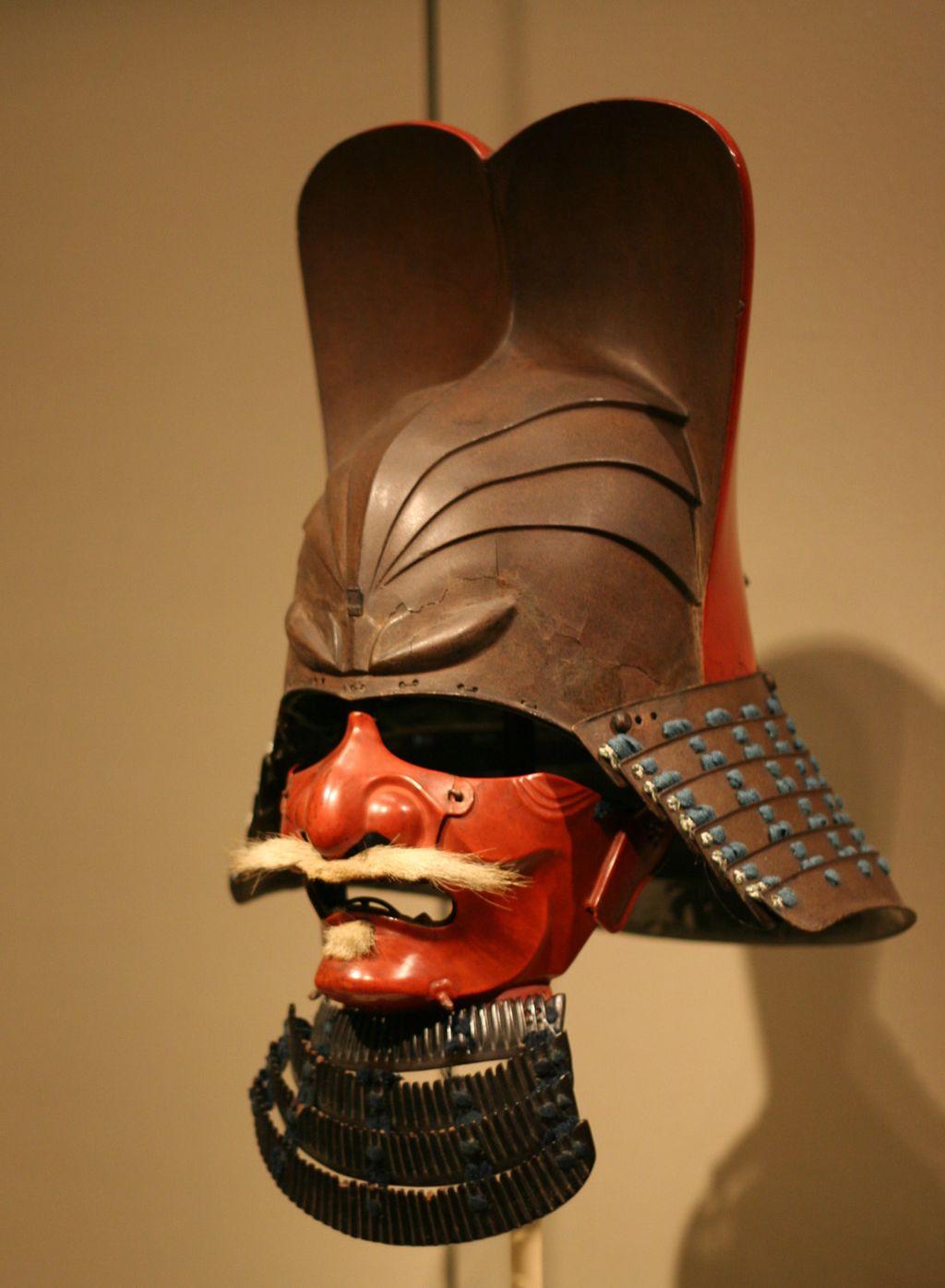
It is said, too, that the sword is the soul of the samurai. In truth, most samurai led austere lives and had few possessions: their clothes, their armour and above all their sword. The manufacture of a sword was a magical act as well as an art and technique taken to the highest limits. It was a living being, with which the samurai became identified. It symbolized his own essence and his own honour.
One of the surprising statements in the exhibition was that “50% of samurai were women.” This assertion has caused some controversy, as it seemed to imply that all samurai women were warriors. Well, they were in a way because they were well versed in the martial arts of swordsmanship and archery, as they had to teach these skills and the warrior mindset to their children. But it was also not infrequent for women samurai to take part in battles and even to be involved in strategy and tactics. One of the most famous female warriors was Tomue Gozen (1157-1247), a prominent figure in the Genpei war between the Taira and Minamoto clans. After retiring from military life, she married and had a son, and after her son’s death she became a nun.
Another notable figure was Masako (1156-1225), wife of the Shogun Minamoto no Yoritomo. As the exhibition guide explains, Masako took command of political matters after her husband’s death. In one of the images on display she is shown receiving a battle report, suggesting her role directing tactics during the civil wars. She was famed for her morality and exceptional leadership.
On a more mundane level, samurai women served as firefighters in the capital city Edo, and the exhibition features some beautiful red firefighting costumes. This marriage of aesthetics and practicality was one of the recurring features of the exhibition. Nowadays, we tend to go for functionality, but psychologists such as James Hillman[2] have pointed out how important beauty is to give meaning, purpose and joy to our existence. To turn existence into Life. In this art the samurai, some of whom were notable poets and painters, were true masters.
We cannot, of course, ignore the shadow side of the samurai ideal, which made itself felt in the part Japan played in the Second World War. Every ideal has its shadow side just as every person does, so the noble human being must always be watchful to ensure that the shadow does not overpower the one who casts it.
The samurai also give us a possible answer to the question: how can we apply heroism in times of peace? For this is exactly what they did in the Edo period. They applied their loyalty and efficiency to the just administration of the State for the benefit of all.
This period of peace and prosperity ended with the coming of the American fleet under Commodore Perry in 1854, which brought Japan out of its isolation and into the orbit of the Western world. According to Nitobe, although the samurai were disbanded as a social class in 1876, Bushido continued to exist through the ethic of service that enabled Japan to find its own place in this new world.
Further reading:
Suzuki, D.T. An Introduction to Zen Buddhism (Rider and Company, 1969)
Storry, Richard. The Way of the Samurai (Orbis, 1985)
Smith, Bradley. Japan. A History in Art (Hamlyn, 1972)
Image Credits: BY Gaius Cornelius | Wikimedia Commons | CC BY-SA 4.0
What do you think?