The Timeless Spirit of Sport
Article By Sofia Venuti
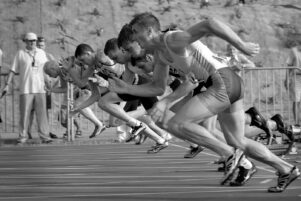 Sport is not only formative for individuals, but is also a social and global concept which includes the responsibility for human development through everyday activities. In fact, some of the greatest ancient philosophers recognized the importance of developing a harmoniously balanced personality where physical education and sport played a significant role.
In the West, Socrates, Plato and Aristotle, for example, acknowledged that sport aids the pursuit of virtues, such as wisdom, courage, temperance and justice. Their systems of education enabled students to have a physical, moral and intellectual education in one space. This was actually initially an open-air space where a holistic curriculum would be taught, harmonising mathematics, physics, astronomy and dialectics with poetry, music, military training and “gymnastics” in the forms of running, wrestling, boxing, ball games and other physical activities. Socrates and Plato called this space the “Gymnasium”, and Aristotle later developed the “Lyceum”. It’s quite ironic that what we call our modern educational institutions (which in most cases focus on academic education) in much of the West derive from ancient Greek athletic grounds.[1]
For Plato, physical education had the purpose of developing the human character. He wrote: “Physical training, no less than education in literature and the arts, has to do with the soul.” He clarified that physical training as part of a harmonious education is drastically different from physical training done only to become a better athlete: training only the body produces disharmony at the expense of the other aspects of the personality, which invariably prevents the athlete from achieving “kalokagathia”. “Kalokagathia” is a classical Greek concept that combines the ideas of physical beauty and moral virtue. It is an ideal of noble personal conduct, of harmony of the body and mind, achieved through wholeness and the harmonious balance of the material and spiritual aspects of the human being. It is derived from the Greek words “kalos” (καλός), meaning beautiful, and “agathos” (ἀγαθός), meaning good or virtuous. The term embodies the ideal of the complete human personality, harmonizing both the body and the soul. Similarly, in Nicomachean Ethics, Aristotle disagreed with “all exaggerated unilateral development, whether mental or physical” and believed that developing the body alone was not enough to give meaning to one’s life.
In the East, sport was seen as a means for the development of the human being too. Ancient China, for example, embraced martial arts and archery, with the philosophy of balance and harmony playing a significant role in the development of these disciplines. In India, traditional sports like Kabaddi and Kho-Kho were played to enhance physical fitness and foster a sense of community. In much of the African continent, sport was seen with a similar lens, with even more emphasis on the interconnectedness and unity between people. In many African countries there was the concept of Botho or Ubuntu, which was a philosophy of life around the concept that “I am a person through other persons”, and represented the aspect of humaneness, personhood, morality and humanity. In India, the practice of the physical exercises of yoga was only a minor part of the whole practice of yoga, which included training of the mind and connecting with the spiritual during study and everyday activities. In many ancient traditions sporting activities were also combined with music, dance, powerful symbolic costumes and gestures, rhythmic chanting, rituals, ceremonial competitions and the involvement of nature. The purpose of these activities was to connect the participants’ body, mind and soul with their ancestors, cultural history, ancient wisdom, nature spirits and God/s.
So, it is evident that sport and physical education should aim at developing individuals so that they can contribute positively to self, family and community, through the development of values and the inner self. This was somewhat lost in time, until the late 19th century with the formalization of the Olympic Games as a global activity and Olympism as a concept.
The Olympic Games have been held in Olympia, Greece, since at least 776 BCE. They initially featured events like running and wrestling, then expanded over the centuries to include a variety of disciplines, emphasizing the Greeks’ commitment to physical excellence and the pursuit of athletic virtue. Olympism is a social philosophy that emphasises the role of sport in world development, international understanding, peaceful co-existence, and social and moral education. Like all large scale socio-cultural movements across history and the globe, the development of a structure and system to fulfil this social philosophy began by establishing some principles and symbolic elements.
Olympism translates into a few simple phrases that capture the essence of what an ideal human being ought to be and aspire to. It promotes the ideas of:
- – individual all-round harmonious human development
- – towards excellence and achievement
- – through effort in competitive sporting activity
- – under conditions of mutual respect, fairness, justice and equality
- – with a view to creating lasting personal human relationships of friendship
- – international relationships of peace, toleration and understanding
- – and cultural alliances with the arts
These concepts are further represented by the Olympic symbol, motto, anthem, oaths and the torch relay.
The Olympic symbol is composed of 5 interlinked rings and is the visual representation of Olympism. The rings are the only official symbol of the Olympics, designed by Pierre de Coubertin in 1913. The 5 rings represent the 5 continents, interlinked to show the universality of Olympism and how athletes from all over the world come together for the Games. On the Olympic flag, the rings appear against a white background so that, together, the 6 colours of the flag represent all the nations.
The Olympic motto is CITIUS, ALTIUS, FORTIUS, which, translated from the Latin, means FASTER, HIGHER, STRONGER. These words encourage athletes to give their best when they compete, on the understanding that the most important thing in the Games is taking part, playing well and fairly, not winning; what is essential in life is not conquering but fighting well. Giving one’s best and striving for personal excellence in every aspect ourselves form a laudable goal.
The Olympic anthem and the oaths are part of the official protocol of the opening ceremonies of the Olympic Games. Those who take the oath and sing the anthem are nationals of the host country, who hold a corner of the Olympic flag as they say the words. What does taking an oath mean, and what effect does singing an anthem with thousands of other people have on us humans? Setting aside any religious or monarchic connotations (such as in the judicial systems of America and Britain), an oath is a pact with the archetypes of justice and truth – as well as with our higher selves, which channel these archetypes if we silence the voice of our lower self and listen to the higher. If we break an oath by lying, cheating and such things, we betray not only those around us, but also our true selves and the universal principles which govern our universe.
Along with the flag, the Olympic flame and torch relay are the most well-known elements of the Games. In modern times, the flame is an expression of the positive values that human beings have always associated with the symbolism of fire. The flame is lit and kindled at Olympia, recalling the ancient Greek roots of the Games and emphasizing the link between the ancient and modern Games. From there, the flame is carried to the host city by thousands of torchbearers, announcing the Games and transmitting a message of peace and friendship to all along the way. It also promotes the culture and natural riches of the regions through which it passes. Reflecting more deeply, fire is symbolic of concepts of transformation, purification and victory over darkness, so the Olympic Games give an opportunity for participants to overcome personal challenges and develop virtues to align their “lower” aspects with the “higher”. Also, recalling the myth of Prometheus who stole the fire from the Gods to give to humanity, we can reflect on the dualism of our human predicament: humans are given the tools for good and for evil, but it is our moral choice which determines how we use them.
Sometimes we can see that this predicament plays out not in favour of these principles, in the Olympics or other global sporting activities, where capitalism, political leverage or division cause humans to go against these principles, individually or collectively. Luckily, we all have an opportunity to recognise and act differently, however small or big our impact may be.
Further reading:
Reid, H., Athletics and Philosophy in the Ancient World (Routledge, 2011)
Kretchmar, R.S., et al., History and Philosophy of Sport and Physical Activity (Human Kinetics, 2017)
International Association for the Philosophy of Sport website https://iaps.net/
Image Credits: By Pixabay | CC BY PD
Related posts:



Image References
BY Pixabay | CC BY PD
Permissions required for the publishing of this article have been obtained
Article References
[1] In Germany and Austria, academic secondary schools are called ‘Gymnasium’, while in France and Italy they are called ‘Lycée’ and ‘Liceo’ respectively.
What do you think?