Showing 66 articles
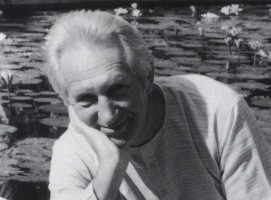
The Eco-Philosophy of Henryk Skolimowski
Author: Istvan OrbanDecember 27, 2015
The World is a Sanctuary – according to Henryk Skolimowski, a contemporary Polish philosopher regarded as the father of eco-philosophy – and not a Machine, as Newton proclaimed. Skolimowski studied at Oxford, where he received his PhD, then went on to teach philosophy for many years in the United States. Skolimowski’s eco-philosophy goes against the [...]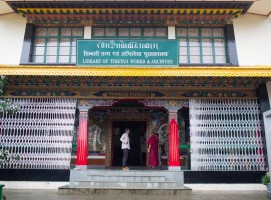
In Conversation with Geshe Lhakdor
Author: Yaron BarzilayOctober 7, 2015
During their grueling journey across the Himalayas, Tibetan refugees carried hundreds of manuscripts into India, often guarding them with their lives. Many of these precious texts were offered to His Holiness the Dalai Lama, who founded the Library of Tibetan Works and Archives in Dharamsala (India), dedicated to preserve and promote the Tibetan heritage. Today [...]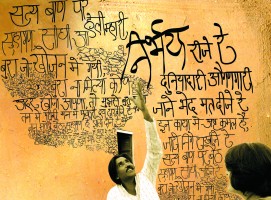
Let’s Listen Then In Conversation with Shabnam Virmani
Author: Manjula NanavatiJuly 19, 2015
Shabnam Virmani is the founder of the Kabir Project, which consists of a series of ongoing journeys inquiring into the spiritual, cultural, and socio-political resonances of the 15th century mystic and poet Kabir. Housed at the Srishti Institute of Art, Design and Technology (Bengaluru), the Kabir Project team has worked with this music and poetry [...]
Tolerance and Fundamentalism
Author: Julian ScottFebruary 1, 2015
It seems strange that fundamentalism and fanaticism should be growing stronger in the 21st century when, according to past predictions, we should be entering an age of enlightened progress and rational understanding. But the rise of fundamentalism is due in part to the failure of rationalism to cater for humanity’s deeper spiritual needs. Fundamentalists have always existed. In [...]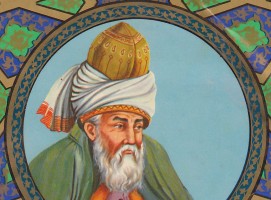
Rumi: The Mystic
Author: Bhavna RoyJanuary 30, 2015
Eight centuries ago a culture of mystical Islam suffused the lands extending from modern day Turkey (Anatolia) to modern day Afghanistan and Iran (Khorasan); it was called Sufi Islam. Etymologically, the word ‘Sufi’ is derived from the Arabic word safa, meaning purity. Mystics of the order created a path towards attaining self-knowledge and god-realisation in [...]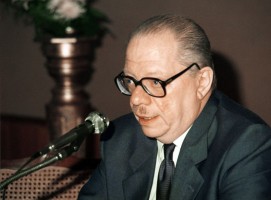
Eclecticism, Searching for Truth Beyond Fanaticism
Author: Jorge Angel LivragaOctober 3, 2014
“Eclecticism” is the name given to the philosophical position which, without objecting to anything a priori, analyzes and considers things, compares and relates them in search of the best of them all, with a view to finally selecting the one that is most qualified as worthy of acceptance. But this clear and concise definition, squarely [...]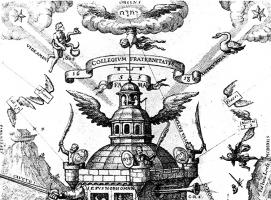
The Mysterious Fraternity of the Rosicrucians
Author: Julian ScottAugust 8, 2014
In 1614 and 1615, two ‘Rosicrucian Manifestos’ were published in Germany. They described the foundation of the “Fraternity of the Rosy Cross”, outlined its basic principles and invited learned men of good will to apply for membership and contribute to a “general and universal reformation of the whole wide world”. The first Manifesto, entitled “Fama [...]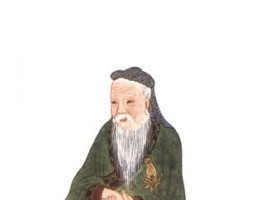
Confucius
Author: AnonymousAugust 8, 2014
The philosopher who has had most influence on the Chinese people is known in the history of thought by the name of K’ung-fu-tzu, or Master K’ung, which the Jesuit missionaries of Peking latinized to Confucius. According to tradition, K’ung Chung-ni, or K’ung Ch’iu was born in Ch’ü-fu in the State of Lu, on the 21st [...]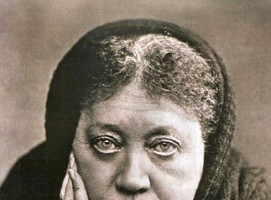
Helena Petrovna Blavatsky
Author: AnonymousAugust 8, 2014
But to the public in general and the readers of the Secret Doctrine I may repeat what I have stated all along, and which I now clothe in the words of Montaigne: Gentlemen: “I have here made only a nosegay of culled flowers, and have brought nothing of my own but the string that ties [...]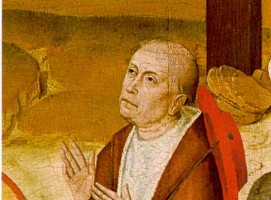
Nicholas of Cusa
Author: AnonymousAugust 8, 2014
Nicholas Cryfts – or Krebs – was born in Kues (Cusa), on the banks of the River Moselle, in the region of Trier, now Germany, in 1401. His father, Johan Cryfts, a rich ship owner, died in 1451 and his mother, Catherina Roemer, in 1427. His early education took place at the school of the [...]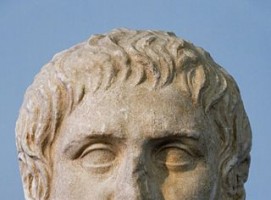
Plato
Author: AnonymousAugust 8, 2014
The son of Ariston and a descendant of King Codrus and Perictione, who was a descendant of the great lawgiver, Solon, he was born in Athens in 429/28 B.C. and died in 347 B.C. His real name was in fact Aristocles and Plato was a nickname that means “broad-shouldered”. It was apparently given to him [...]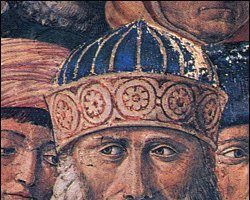
Plethon
Author: AnonymousAugust 8, 2014
He was born between 1355 and 1360 in Constantinople. Although we have no definite information about his family or origins, the various authors who have researched the subject believe that he was born into a well-to-do family, probably of an orthodox priestly origin, so it is logical to suppose that he received a complete education [...]