On Altruism in Nature
Article By Adhiyan Jeevathol
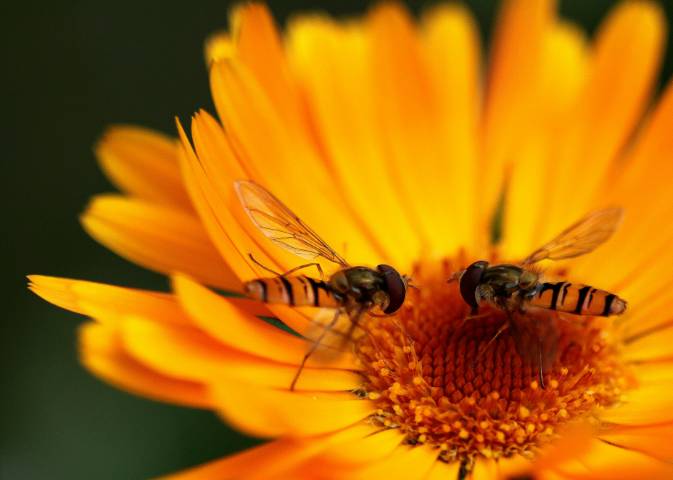 I remember a number of years ago in one of my lectures at university learning about the curious characteristics of Dictyostelium discoidem – otherwise known as cellular slime molds (CSMs). Not to be confused with the fungal moulds which we are more familiar with, CSMs are single-celled organisms that, when put in conditions of starvation, aggregate to form a multi-cellular structure. However, unlike multicellular organisms such as ourselves, the cells in this aggregation all have different genes. Some of the individual cells within this structure make up the stalk which hold up the other cells at the top which make up the spores. The latter are able pass on their genes whilst the former die and are not able to reproduce. It seems then that the cells that make up the stalk sacrifice their reproductive potential to help the spore cells reproduce. In other words, what we have here, in this humble microbe that you can find in the soil outside, is a case of altruism.
CSMs are far from the only organisms in Nature that show altruism, which we define as behaviour that harms the actor but benefits the recipient. For example, vervet monkeys produce alarm calls to warn the rest of their group of predators despite increasing their own risk of being attacked. However, the main example of altruism in Nature are the social insects who live in colonies numbering from 10 to 20 million individuals depending on the species. The members of each colony are usually organized into two basic castes: one or a small number of reproductives and a large number of workers who forgo their own reproduction to raise the young of the reproductive caste. These ‘eusocial’ societies, as they are called, are the highest level of sociality found in the natural world outside of humans.
This is certainly very puzzling from an evolutionary perspective. Darwin himself wrote in the Origin of Species that the altruism shown in insect societies appeared “insuperable” and “actually fatal to my whole theory”. This is because evolution through natural selection presents a picture of Nature where the primary aim for the individual is to propagate its own genes. Therefore, in theory, altruistic behaviour which seems to limit the reproductive potential of the individual ought to have been eliminated by natural selection. So why has altruism persisted
The first theory that attempted to explain this and gained traction was that of group selection. Darwin himself proposed a type of group selection in the Origin of Species. Group selection states that natural selection does not just act on an individual level but also on the level of groups. In theory then, it would be advantageous for such groups to have individuals that are more altruistic, as this would enable them to outcompete those dysfunctional groups that are made up of conflicting selfish individuals. However, in the 1960s John Maynard Smith and G.C. Williams argued with the support of mathematical models that group selection is not a strong enough evolutionary force to prevent selfish individuals from exploiting and outcompeting the altruists. Thus, over time selfish individuals would propagate themselves leaving few altruists within the group.
A different approach decided to try and bring natural selection down to a smaller level than the individual – that of genes. The theory, known as kin selection, was proposed by W.D. Hamilton in 1964. In simple terms, the theory states that organisms are more likely to be altruistic the more related they are. Empirical studies have borne this out. Helper birds are more likely to raise the young of their relatives than strangers. In the case of eusocial insects, many colonies, particularly the hymenoptera (wasps, ants and bees) have a haplodiploidy sex determining system, meaning that all fertilized eggs with two pairs of chromosomes (diploid) become female while all the unfertilized eggs, with one pair of chromosome (haploid), become male. As a result, sisters share identical copies of their father’s genes, as he only has one pair of chromosomes, and half of their mother’s genes. This creates a unique condition where on average the sisters are more closely related to each other than daughters are to their mothers. Therefore, for the female worker it becomes evolutionarily beneficial for them to forgo their own reproductive potential and help their queen to make more sisters as a way of propagating their genes.
There are, however, occasions where unrelated organisms may show altruism. The classic example of this are the vampire bats which share blood meals with their starving roost mates that are unable to find food themselves. However, in such cases there seems to be a degree of reciprocity as studies show that bats are more likely to feed roost mates that have helped them in the past.
At present kin selection and reciprocal altruism are the dominant paradigms in explaining altruism in Nature. However, kin selection, though it is widely accepted, does have its critics within the scientific community. These critics have noted that there are many organisms that have developed eusociality without having the haplodiploidy sex determining mechanism described above. These include a certain species of beetle, termites and the mammalian mole rat. These cases are therefore not as well explained by kin selection. Instead, these critics think that selection operates at multiple levels simultaneously: the gene, the individual and the group. For example, initially when colonies begin it may be beneficial to preserve a high degree of relatedness between individuals to dissuade selfishness, but as colonies mature and become more successful it may be more beneficial for colonies to have more genetic variability to make the group as a whole more resistant to potential diseases, for instance. Therefore, as with most scientific theories, which are ultimately models of a complicated reality, there is an ongoing debate and continuous refinement. However, it does seem that relatedness between individuals has had a large part to play in the evolution of altruism. This has led some people to believe that this devalues altruism, as evolutionary theory presents it as a clever way of passing one’s genes or just an example of delayed self-interest in the case of reciprocal altruism.
Firstly, is it so bad that altruism can be beneficial to the survival of a species? Rather, shouldn’t we be pleased that the study of Nature has much to say in favour of altruism? It would be much harder to argue in favour of altruism if nature’s wisdom showed it was a fruitless ideal. Instead, it is clear that altruism and co-operation are part of nature rather than a concept purely made up by human beings. Behaving altruistically, then is not something contrary to nature but in line with it.
Secondly, we must distinguish between the mechanism through which altruism evolved and how conscious beings can wield this gift. This is evident even in other animals who can show acts of deep and moving love. For example, it is hard to see the evolutionary advantage of elephants mourning their dead herd members and even in some cases burying them. Likewise, we too have this power to choose what we do with our potential for altruism. Darwin himself recognized this as he said:
As man advances in civilization, and small tribes are united into larger communities, the simplest reason would tell each individual that he ought to extend his social instincts and sympathies to all members of the same nation, though personally unknown to him. This point being once reached, there is only an artificial barrier to prevent his sympathies extending to the men of all nations and races.
Such noble sentiments are worth living by.
If any images used in this article are in violation of a copyright, please get in touch with [email protected] as soon as possible. Appropriate action will be taken.

Permissions required for the publishing of this article have been obtained
Article References
Okasha, Samir. Biological Altruism. The Stanford Encyclopedia of Philosophy (Summer 2020 Edition), Edward N. Zalta (ed.). Nowak, MA, Tarnita, CE, Wilson, EO. The Evolution of Eusociality. Nature. 2010 Aug 26; 466 (7310): 1057-62. Hölldobler Bert, Wilson EO. The Superorganism: the beauty, elegance, and strangeness of insect societies. 2009. pp. XVI-XXI Darwin, Charles. The Descent of Man. John Murray, 1871 Darwin, Charles. On the Origin of Species. Penguin Classics (2009 Edition), p. 213 Richard Ellis Hudson, Juliann Eve Aukema, Claude Rispe, Denis Roze. Altruism, Cheating, and Anticheater Adaptations in Cellular Slime Molds. The American Naturalist, 2002, 160 (1), pp. 31-43. Seton, Thompson, “Wild Animals I have Known”, 1898, Metro Publishing (2017 Edition), p. 1-27
What do you think?