
Inner Freedom
Author: Guner OrucuAugust 26, 2014
Freedom is a concept that has always preoccupied mankind. We all want to be free; but free from what? Do we really know what kind of freedom we are looking for or how we can reach that freedom? We are going to use philosophy to investigate and to understand freedom with an emphasis on inner freedom, which is more important and valuable than the physical freedom that is popular today. Inner [...]
The Myth of Unending Progress
Author: Jorge Angel LivragaAugust 26, 2014
The term “progress” derives from the Latin “progressus” which means, quite simply, the action of going forward. It is a mere illusion of the senses, intoxicated with hope, the supposition that every forward movement is synonymous with improvement, happiness and joy. The arithmetic progression of 1, 2, 3, 4, etc. does not mean that 2 is better than 1. If we humanize the process, it [...]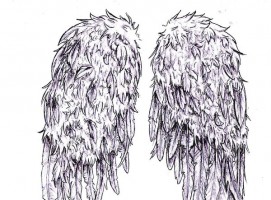
The Symbolism of Wings
Author: M.A. Carrillo de Albornoz & M.A. FernándezAugust 22, 2014
Wings are the symbol of lightness, spirituality, the possibility of flying and rising up to heaven. Wings are the expression of the aspiration of the soul towards a higher than human condition, in other words the aspiration to transcend the human condition. Wings are related to the cognitive faculty, imagination, thought, freedom and victory. According to Hindus, wings are the expression of [...]
The Symbolism of the Thread
Author: M.A. Carrillo de Albornoz & M.A. FernándezAugust 22, 2014
The symbolism of thread is essentially that of the relation existing between all states of being and between the latter and their First Cause. This symbolism is clearly expressed in the Upanishads where thread links this world to the other world and to all beings. This thread is both Âtma and Prâna. Because it is linked to the main centre, thread must, in all things, be followed back to its [...]
The Symbolism of Chess
Author: M.A. Carrillo de Albornoz & M.A. FernándezAugust 22, 2014
Though the origin of the game of chess is still unknown and mysterious, it is quite certain that it originated in the East, though it is the West that became infatuated with it. We also know that, in its beginnings, the game of chess was part of the strategy of war and was therefore applied to the Kshatriya (warrior caste). The black and white pieces symbolized darkness and light, the war [...]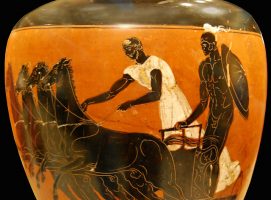
The Symbolism of the Charioteer
Author: M.A. Carrillo de Albornoz & M.A. FernándezAugust 22, 2014
The charioteer is the symbol of calmness, self-control and mastery of the mind and psyche, so ever changing and unstable. He reduces the manifold, reaching us from the outside world, to the inner unity of will. The horses of the chariot are our instincts and passions. In general there are four of them, corresponding to the number of planes making up the human being, according to the seven-fold [...]
The Three Princes of Serendip
Author: AnonymousAugust 22, 2014
"In ancient times there existed in the country of Serendippo, in the Far East, a great and powerful king by the name of Giaffer. He had three sons who were very dear to him. And being a good father and very concerned about their education, he decided that he had to leave them endowed not only with great power, but also with all kinds of virtues of which princes are particularly in need.” So [...]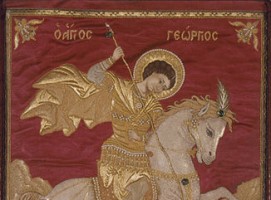
Forty Years Fighting Racism and Intolerance
Author: John GilbertAugust 8, 2014
A century with no solidarity One of the worst plagues that the twentieth century has had to bear is racial discrimination. It has not only plunged over half of the human population into oblivion and poverty, but during the periods of greatest alienation, it has also led to the systematic extinction of certain minorities. When this century sees its end, it will be remembered as one in which [...]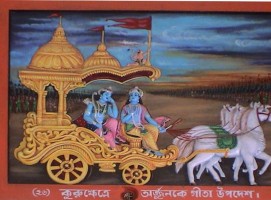
Modern Mythology
Author: Sabine LeitnerAugust 8, 2014
Introduction Despite their universal existence in all civilizations and all times of history, myths have often been scoffed at and regarded as old wives tales. August Comte, the founder of positivism and sociology, relegated myths to the most early and primitive level of intellectual evolution and Lucien Lévy-Bruhl, a French philosopher, associated myth with pre-logical mentality common to [...]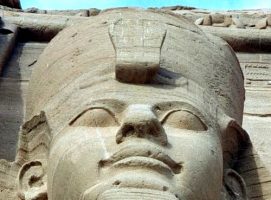
Ramses II
Author: Alex WarrenAugust 8, 2014
If, today, at the end of the twentieth century, one were to ask the average person to name an Egyptian pharaoh, the reply would probably be, "Tutankhamen." This, of course, is due to the highly unusual discovery by Howard Carter in 1922 of the child-king’s small but almost intact tomb. Tutankhamen died at age 17. Outside of the contents of his tomb, little is known of his reign, and he is not [...]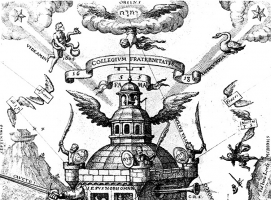
The Mysterious Fraternity of the Rosicrucians
Author: Julian ScottAugust 8, 2014
In 1614 and 1615, two ‘Rosicrucian Manifestos’ were published in Germany. They described the foundation of the “Fraternity of the Rosy Cross”, outlined its basic principles and invited learned men of good will to apply for membership and contribute to a “general and universal reformation of the whole wide world”. The first Manifesto, entitled “Fama Fraternitatis (Fame of the [...]
The Mystery of Animal Migration
Author: Julian ScottAugust 8, 2014
The world record for animal migration is held by a bird called the arctic tern; its journey, starting within weeks of hatching, will take it from northern Greenland, down the western coasts of Europe and Africa, across the Antarctic ocean to the south pole – a total of around 11,000 miles. Less than a year later, it will cover the same distance again on its return journey home. But it’s [...]