
The Myth of the Cave
Author: Miha KosirAugust 3, 2016
In one of Plato’s most well known works - The Republic - we find a short story known as the Myth of the Cave. Socrates asks his listeners to imagine a world under the ground where people live in chains, facing the end wall of a cave. Because they are chained they can’t move or turn around to see the objects behind their backs or the fire which projects shadows onto the wall in front of them. [...]
Renaissance Art and the Enigmatic Genius of Giorgione
Author: Agostino DominiciJuly 25, 2016
The Royal Academy of Arts has recently put together an excellent exhibition presenting some of the greatest painters of the high Renaissance (c. 1490-1530) in a single show. The main intent of the exhibition was to revisit in particular the enigmatic figure of Giorgione, considered by many to be the founder of Venetian painting of the 16th century. After breaking away from the more [...]
At the service of philosophy – Manly P. Hall’s life and teachings
Author: Agostino DominiciJune 13, 2016
A few years ago, while browsing on YouTube, I happened to stumble across some old recordings of lectures covering an array of metaphysical and mystical topics. I was quickly taken by the depth and breadth with which the speaker, effortlessly, delivered his talks. Soon I learned that the person behind those words was a very special man indeed. Manly P. Hall, though unknown to the academic world, [...]
The Brilliance of the Bard!
Author: Siobhan FarrarJune 10, 2016
It is quite remarkable to consider how many words and phrases in regular use today were first penned by William Shakespeare. The literary critic Bernard Levin picked out a few of them: “If you have ever been tongue-tied, a tower of strength, hoodwinked or in a pickle, if you have knitted your brows, made a virtue of necessity, insisted on fair play, slept not one wink, stood on ceremony, [...]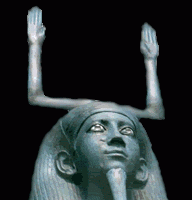
Invisible Egypt
Author: Sabine LeitnerMay 17, 2016
In our culture the word ‘invisible’ is often taken to mean ‘non-existent’. But for the ancient Egyptians, the invisible was the cause of the visible and therefore, in a sense, more important. They realised that the form of a person, what they wear and how they appear is only a reflection of something internal which we cannot see. And likewise that the things that are most important to [...]
William Morris, a 19th century idealist
Author: Natalia LemaMay 11, 2016
Although perhaps most famous as an English textile designer, William Morris (24 March 1834 – 3 October 1896) was also an artist, writer, translator and socialist activist. Inspired by the philosophy of John Ruskin (art critic and champion of the Pre-Raphaelites), Morris was against the tasteless industrial production of arts and promoted the hand-crafted art of artisans, whom he saw as [...]
Nemetona
Author: Natalya PetlevychApril 19, 2016
Many hundreds of years ago when the Romans ruled over vast territories in Europe, a man from Treveri (Trier, Germany) named Peregrinus embarked on a long journey to Aquae Sulis (Bath). The gods were merciful to him and, upon arrival, thankful Peregrinus erected an altar stone to Nemetona and Loucetius Mars, to the Mistress of a Sacred Place and the Master who Brings Light. His ancient message [...]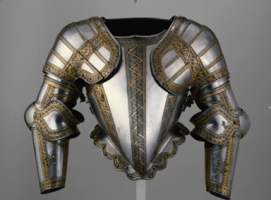
Chivalry
Author: Niamh GallagherApril 19, 2016
Today, the terms chivalry and chivalrous are used to describe unusually courteous behaviour, especially that of men towards women. At the mention of chivalry, many women will sigh that “chivalry is dead” and lament the declining opportunities of being rescued by the fabled “knight in shining armour”. However, what do most of us truly know these days of what chivalry is and has [...]
Art for Enlightenment
Author: Miha KosirMarch 28, 2016
Masterpieces of Tibetan art found in the private temple of the Dalai Lamas have been reproduced and displayed for the first time in a special exhibition at the Wellcome Collection in London. The Lukhang, or “Temple to the Serpent Spirits” was built in the late 17th century on a lake behind the Potala Palace in Tibet’s capital city of Lhasa and it was used only by the Dalai Lamas as a [...]
The Mandate of Heaven
Author: Miha KosirJanuary 24, 2016
The world is changing fast and countries are like other living beings: being born, growing, and even dying. A good illustration of this could be seen at a well-prepared exhibition at the British Museum called Ming Dynasty: 50 years that changed China. The Ming Dynasty (1386 – 1644) was an interval of native Chinese rule following the Mongol Yuan Dynasty (1271-1368), which was so named by its [...]
Beauty in stone – the Greek Miracle
Author: Agostino DominiciJanuary 23, 2016
I have just learned that in the next few weeks the British Museum will be launching a major exhibition on Greek art – Beauty in the human form. Why is it that, despite the passage of twenty-five centuries, the beauty of Greek sculpture still commands so much attention? In what is sometimes called the Greek miracle, many ‘trends’ of thought converged together – the philosophical, the [...]
Revival of the Renaissance
Author: Yaron BarzilayJanuary 20, 2016
Philosophy is an approach to life, a search for a way to try to live a little bit better, a little bit truer, everyday. But by what moral standards should we judge our actions? There is a difference between being immoral, and being amoral. Amoral means that there is no recognition of right and wrong and therefore you cannot act according to what is right. Immoral presumes that you do recognize [...]